
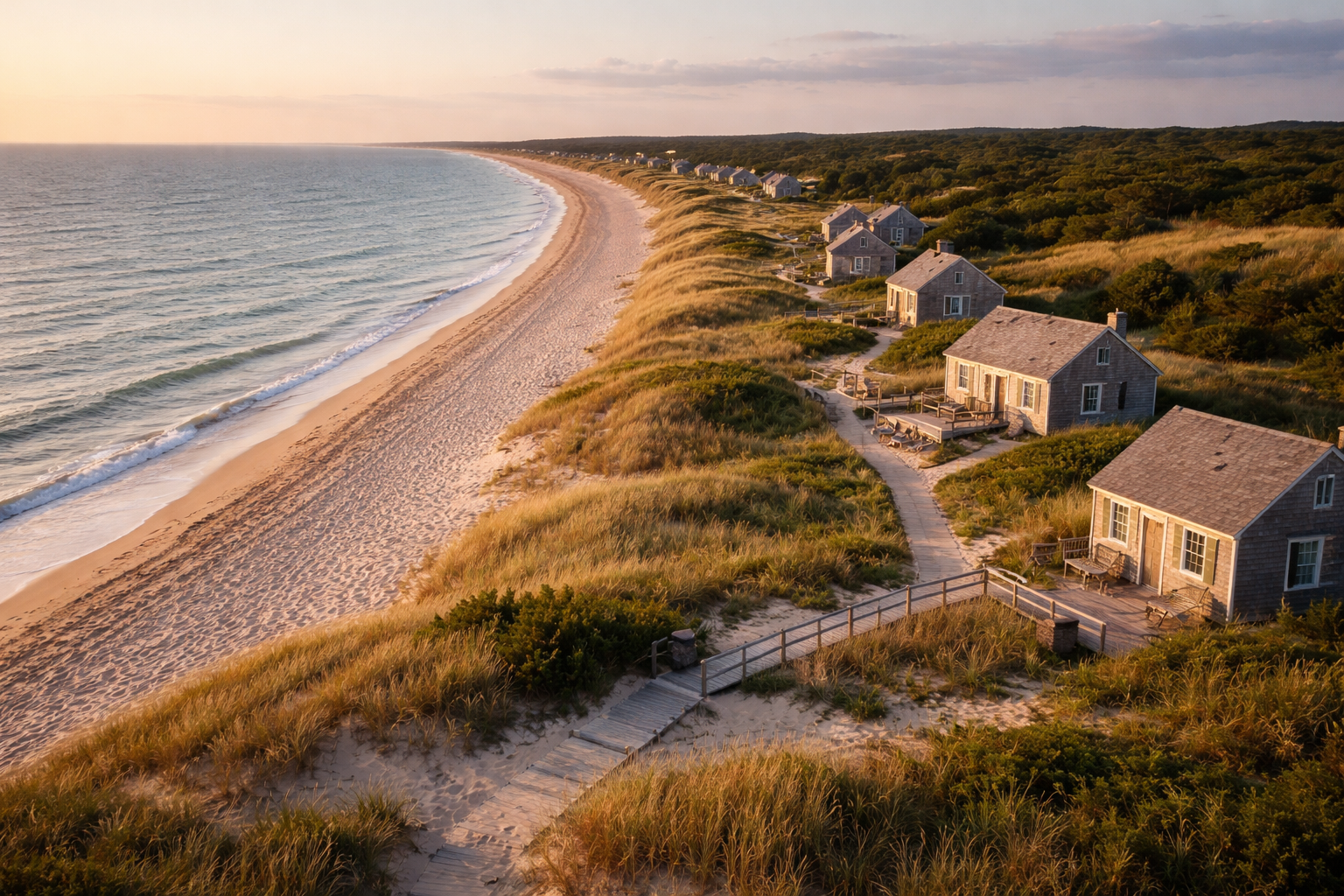
Why Cape Cod Is Worth the Trip in 2026
Cape Cod has been drawing travelers since the early 1600s, but heading into 2026, its appeal feels sharper and more clearly defined than ever. Stretching 65 miles into the Atlantic off the southeastern corner of Massachusetts, this hook-shaped landmass packs more distinct experiences per square mile than almost any comparable coastal destination on the East Coast — and it manages this without the overdevelopment that has swallowed places like Myrtle Beach or the Jersey Shore.
So why is 2026 a particularly smart year to visit? The Cape Cod National Seashore, established by President John F. Kennedy in 1961, has been undergoing a phased restoration of its visitor infrastructure. New accessible boardwalks at Nauset Beach and upgraded interpretive facilities at the Salt Pond Visitor Center are expected to be fully open by Memorial Day 2026. First-time visitors and returning families will find a more polished experience waiting for them — without losing the wild, undeveloped character that makes the Seashore's 40 miles of coastline so singular.
Beyond the beaches, Cape Cod is an ecosystem of distinct towns, each with its own personality. Provincetown crackles with bohemian energy at the tip of the Cape. Chatham exudes old-money quietude on the elbow. Falmouth anchors the Upper Cape with yacht harbors and farm stands. Between them lie saltwater marshes, freshwater kettle ponds carved by glaciers 20,000 years ago, working oyster farms, and a cycling trail network that is genuinely world-class.
For families, the Cape delivers a rare combination: beaches safe enough for toddlers, marine wildlife visible from shore, and towns compact enough to navigate on foot once you're settled. For couples, the off-shoulder season — late September through October — offers the same landscapes at a fraction of the summer price, with lobster shacks still open and leaf-peeping beginning in the inland forests. However you approach it, a Cape Cod vacation in 2026 rewards careful planning, and that's exactly what we're here to help you do.
Best Beaches on Cape Cod
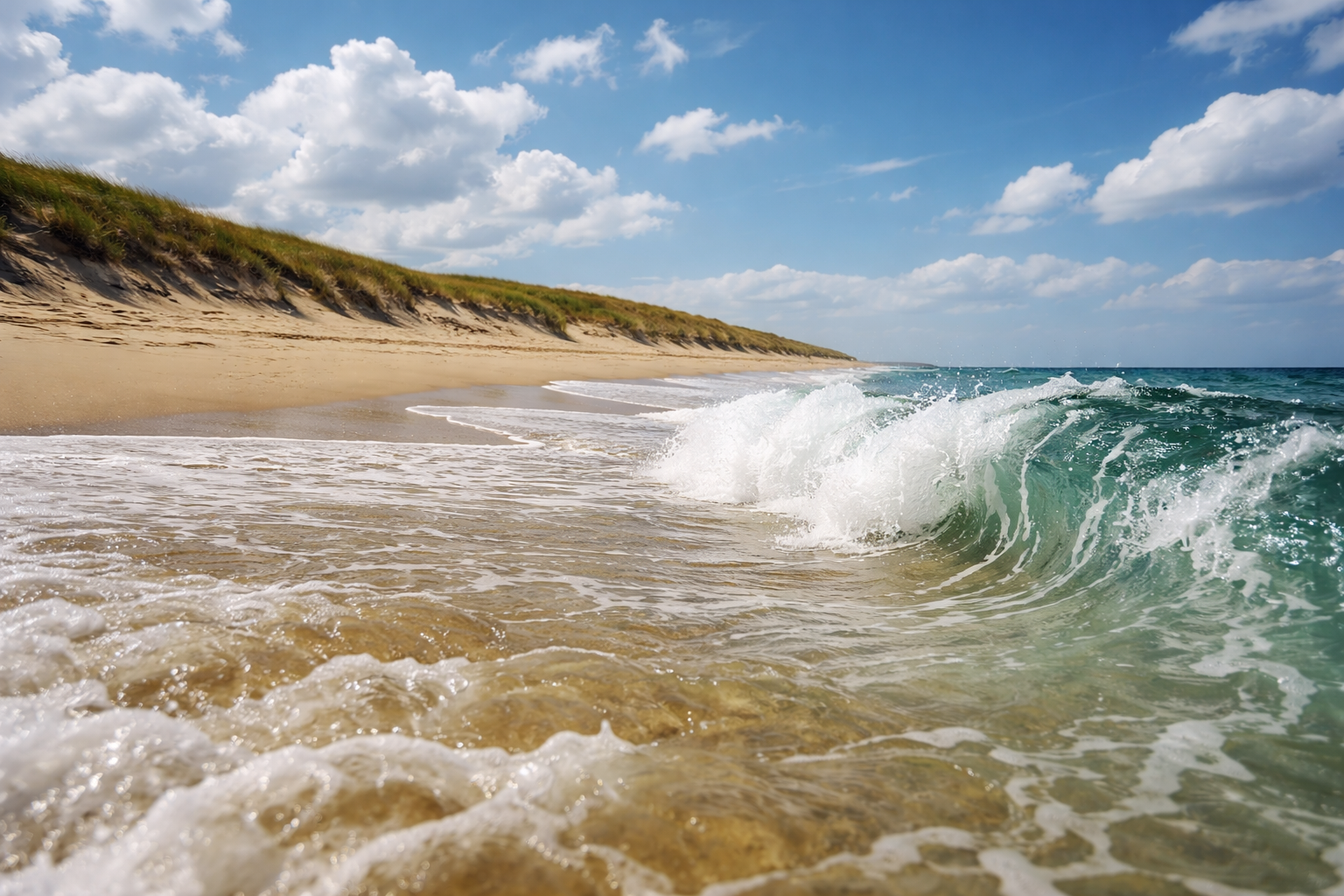
Cape Cod has more than 500 miles of shoreline — ocean beaches, bay beaches, freshwater ponds, tidal flats, the works. The experience varies dramatically depending on which side of the peninsula you choose, and understanding the geography upfront will save you from the classic tourist mistake of driving an hour to a beach that doesn't match what you had in mind.
Ocean-Facing Beaches (Cape Cod National Seashore) The Atlantic-facing beaches of the National Seashore — Race Point Beach in Provincetown, Marconi Beach in Wellfleet, Coast Guard Beach in Eastham, and Nauset Light Beach in Eastham — are the ones that fill travel photography, and for good reason. Surf here is real, rolling in from the open Atlantic, making these beaches exhilarating for strong swimmers and boogie boarders but demanding close supervision for young children. Water temperatures average 62–68°F in peak season. Parking at National Seashore beaches costs $25 per vehicle in summer 2026 (America the Beautiful passes are accepted and represent excellent value if you plan multiple visits). Coast Guard Beach, consistently ranked among the top 10 beaches in the United States by the Coastal Living Index, is accessible by a free seasonal shuttle from the Little Creek parking area — use it in July and August. Seriously.
Bay-Side Beaches Cape Cod Bay, facing west toward the mainland, is where families with toddlers tend to congregate. Chapin Beach in Dennis, Skaket Beach in Orleans, and Sandy Neck Beach in Barnstable are characterized by shallow, warm water (averaging 70–74°F by mid-July), extensive tidal flats that expose half a mile of sandbars at low tide, and gentle or non-existent surf. These beaches sit outside the National Seashore and require either a town beach sticker (typically $20–$30/day for non-residents) or early arrival before 9 a.m., when attendants are not yet on duty.
Freshwater Ponds First-timers often overlook Cape Cod's freshwater kettle ponds — formed when glacial ice blocks melted and collapsed the terrain — but they offer swimming in crystal-clear, warm water without jellyfish or salt. Gull Pond in Wellfleet (accessible via a short trail) and Long Pond in Harwich are local favorites. Water temperatures in these ponds reach 76–80°F in August, warmer than any ocean or bay beach on the Cape.
Our Beach Recommendations by Trip Type - Best for families with young children: Skaket Beach, Orleans - Best for surfers and strong swimmers: Marconi Beach, Wellfleet - Best for solitude: Race Point Beach (the far northern lot, accessible by foot or oversand vehicle permit) - Best for a sunset swim: Chapin Beach, Dennis (west-facing, dramatic sunsets over the bay) - Best freshwater swim: Gull Pond, Wellfleet
Where to Stay: Cape Cod Vacation Rentals

For most trip profiles — especially families and groups — the private rental market on Cape Cod beats hotels without much contest. The reason is straightforward: hotel inventory on the Cape is limited, concentrated in a handful of boutique inns and chain properties that rarely deliver the kitchen, outdoor space, and proximity to the water that a well-chosen rental can. It's not even close.
What to Expect from Cape Cod Rental Prices in 2026 Weekly rental rates for summer 2026 (defined as late June through Labor Day) range considerably by location and property size. A two-bedroom cottage in Brewster or Dennis within walking distance of a bay beach typically runs $3,500–$5,500 per week. A three-bedroom home with bay views in Wellfleet or Truro runs $6,000–$10,000 per week. At the premium end, a four-bedroom oceanfront or bayside home in Chatham or Provincetown can reach $15,000–$22,000 per week in peak July. Shoulder season (Memorial Day through late June and Labor Day through Columbus Day) drops these figures by 30–45%.
The Best Towns for Cape Cod Vacation Rentals For families: Brewster and Dennis offer the best combination of bay beach access, proximity to the Cape Cod Rail Trail, farm stands, and mid-range pricing. For couples and cultural travelers: Provincetown's rental market features beautifully restored Victorian homes and modern condos within walking distance of Commercial Street's galleries, restaurants, and whale-watching boats. For a quieter, upscale experience: Chatham rentals put you close to the famous Chatham Fish Pier (where the fishing fleet unloads daily, a free spectacle at 2–3 p.m. most summer afternoons), Outermost Harbor Marine, and some of the Cape's finest restaurants.
What to Look for When Booking Book Cape Cod rentals no later than January 2026 for peak summer weeks — the best properties go under contract in winter. Key questions to ask: Is the property within the town's beach sticker program (which often includes multiple town beaches)? Is there outdoor shower access for post-beach cleanup? What is the parking situation? Properties on narrow Cape Cod roads can have deceptively limited parking for larger groups.
Vrbo remains our preferred platform for Cape Cod vacation rentals because of its deep local inventory, transparent fee display, and robust filtering for pet-friendly and waterfront properties. Browse early and use the map view to confirm proximity to specific beaches before committing. For the widest selection of verified Cape Cod cottages, waterfront homes, and family-sized properties, [browse Cape Cod vacation rentals on Vrbo]() and filter by your target town and travel dates. If you want to compare multiple property types across the peninsula before narrowing down, [search all Cape Cod rentals on Vrbo]() to see weekly rates, availability calendars, and verified guest reviews side by side.
Plan this trip
Getting Around Cape Cod

Transportation is an underestimated logistical challenge on a Cape Cod vacation. The peninsula's road network is anchored by Route 6 (the Mid-Cape Highway) and Route 6A (the Old King's Highway), neither of which is built for the traffic volumes of a July weekend. In peak season, the Sagamore and Bourne bridges — the only two land connections to the mainland — can back up for two hours or more on Friday afternoons and Sunday evenings.
Our Traffic Strategy Arrive mid-week if at all possible, or cross the bridges before 11 a.m. or after 7 p.m. on Fridays. The Massachusetts DOT publishes real-time bridge delay estimates at mass511.com — bookmark it before you leave home.
Pre-Arranged Ground Transportation from Boston and Providence For travelers flying into Boston Logan International Airport (BOS), Terminal E for international arrivals and Terminal B or C for most domestic carriers, pre-arranging ground transportation to the Cape is significantly less stressful than renting a car and joining the bridge queue. Several licensed car services operate BOS-to-Cape Cod routes, with sedans, SUVs, and van options for larger groups. A pre-booked sedan (Cadillac XTS or similar) from Logan to Hyannis typically runs $180–$240; a Cadillac Escalade or Chevrolet Suburban for groups of four to six runs $260–$340. For the smoothest experience, we recommend reviewing our airport car service guide for details on booking private transfers that include meet-and-greet service at baggage claim. If your group is arriving from T.F. Green Airport in Providence, Rhode Island (PVD) — often a less expensive option than Logan — the drive to the Upper Cape is approximately 90 minutes in non-peak traffic; see our Providence airport transportation page for pre-booked vehicle options.
On the Cape: The Cape Cod Rail Trail Once you're settled, a rental bicycle is often the most efficient way to cover ground. The Cape Cod Rail Trail is a paved, 25-mile multi-use path running from Dennis to Wellfleet, with a 5.5-mile extension to South Wellfleet. Bike rentals are available at multiple trailheads — expect to pay $35–$55 per day for a standard hybrid bike in 2026, or $65–$95 for an e-bike. The trail passes kettle ponds, cranberry bogs, and village centers, and connects directly to several National Seashore beach access points.
The Flex Route (CCRTA) The Cape Cod Regional Transit Authority (CCRTA) operates the Flex Route, an on-demand van service connecting Lower Cape towns from Harwich to Provincetown at $2 per ride. It won't replace a car for families hauling beach gear, but it's genuinely useful for hop-on day trips between towns. The P-Town Shuttle from Provincetown to Truro and Wellfleet runs daily in summer and is a reliable way to sidestep the notoriously limited Provincetown parking.
Car Rentals If you need a rental car, pick it up at Logan or PVD rather than at Hyannis (Barnstable Municipal Airport, HYA), where inventory is smaller and rates run 20–35% higher. For luxury vehicle rentals — particularly if you need a large SUV like a Lincoln Navigator or Mercedes Sprinter van for a multi-family group — booking through our luxury ground transportation service typically provides better availability and more consistent vehicle quality than traditional rental counters.
Top Things to Do on Cape Cod

The best memories from a Cape Cod family trip or romantic getaway rarely come from a single bucket-list moment. They come from the accumulation of smaller, genuinely local experiences. Here is our curated list of the most rewarding activities, ranging from free natural wonders to guided experiences worth every dollar of the booking fee.
Whale Watching from Provincetown The Stellwagen Bank National Marine Sanctuary, located 25 miles north of Provincetown, is one of the most productive whale-feeding grounds on the Eastern Seaboard. Humpback, fin, minke, and right whales feed here from April through October, and naturalist-led whale watch cruises departing from Provincetown's MacMillan Pier have sighting rates above 95% in peak season according to the operators' own published logs. Dolphin Fleet Whale Watch and Captain John Boats are the two primary licensed operators; trips run approximately 3.5 hours and cost $55–$75 per adult, $35–$50 for children in 2026. Take the mid-morning departure over the evening trip — calmer seas and better light for photography.
Kayaking the Great Marsh The Great Marsh ecosystem stretching from Barnstable to Eastham is among the largest salt marsh systems in New England, and paddling through it at high tide is an experience unlike anything available on more developed coastlines. Guided kayak tours through Cape Cod Kayak (based in Brewster) and Goose Hummock in Orleans run approximately 2–3 hours and cost $65–$90 per person. Self-guided rentals are available for experienced paddlers.
The Cape Cod Museum of Natural History Located in Brewster, this underrated museum offers exhibits on the Cape's glacial geology, marine ecology, and migratory bird populations — plus 80 acres of trails through salt marsh and upland forest directly behind the building. Admission is $12 for adults, $6 for children 3–12 in 2026. The combination of the museum and its trails makes an excellent half-day activity for families caught on a rainy morning.
Oysterfest and Local Food Events in 2026 Wellfleet's OysterFest, a beloved New England food festival, is scheduled for October 17–18, 2026. The two-day event features freshly shucked Wellfleet oysters (recognized by the FDA as among the cleanest in the country), local craft beer, live music, and a shucking competition. Tickets sell out in advance; the 2025 event drew approximately 15,000 attendees over two days. Book accommodations in Wellfleet or Provincetown for that weekend no later than March 2026.
Cranberry Bog Tours Cape Cod grows approximately 3 million barrels of cranberries annually, making Massachusetts the second-largest cranberry-producing state in the US. During the harvest (late September through October), several growers in Harwich, Carver, and Plymouth offer bog tours and the chance to photograph the dramatic wet-harvest flooding. A&D Farms in Harwich offers free self-guided bog walks from September 25, 2026 through October 12, 2026, with a guided tour option for $15 per person on weekends.
Sunset at Head of the Meadow Beach, Truro Less visited than the main Seashore beaches, Head of the Meadow Beach in Truro offers some of the Cape's most dramatic evening light. Park in the northern lot, walk 10 minutes north along the shore, and after 5 p.m. you'll often have a mile-long stretch of Atlantic beach almost entirely to yourself. No concession stand, no lifeguard — just the Atlantic, the dune cliffs, and one of the genuinely great free experiences the Cape has to offer.
Plan this trip
Best Towns to Explore: Provincetown, Chatham & Falmouth

Cape Cod's towns are not interchangeable. Knowing what each one actually delivers will help you match your accommodation base to your travel personality — and avoid spending a week wishing you'd stayed somewhere else.
Provincetown Sitting at the absolute tip of the Cape, Provincetown (P-Town to everyone who loves it) is simultaneously the Cape's most culturally charged and most geographically remote town. Its permanent population of roughly 3,200 swells to 60,000+ on peak summer weekends, and its mile-long Commercial Street is lined with art galleries (the Provincetown Art Association and Museum, founded in 1914, is the oldest continuously operating art museum in Massachusetts), restaurants ranging from the beloved Lobster Pot to Michelin-recognized seafood temples, and a nightlife scene unlike anything else on the Cape. The P-Town drag scene, a 60-year-old tradition, draws crowds every summer night. Parking in Provincetown is genuinely terrible from late June through August — plan to use the shuttle or arrive by the Bay State Cruise Company fast ferry from Boston's Commonwealth Pier (2 hours 45 minutes, approximately $90 round trip in 2026).
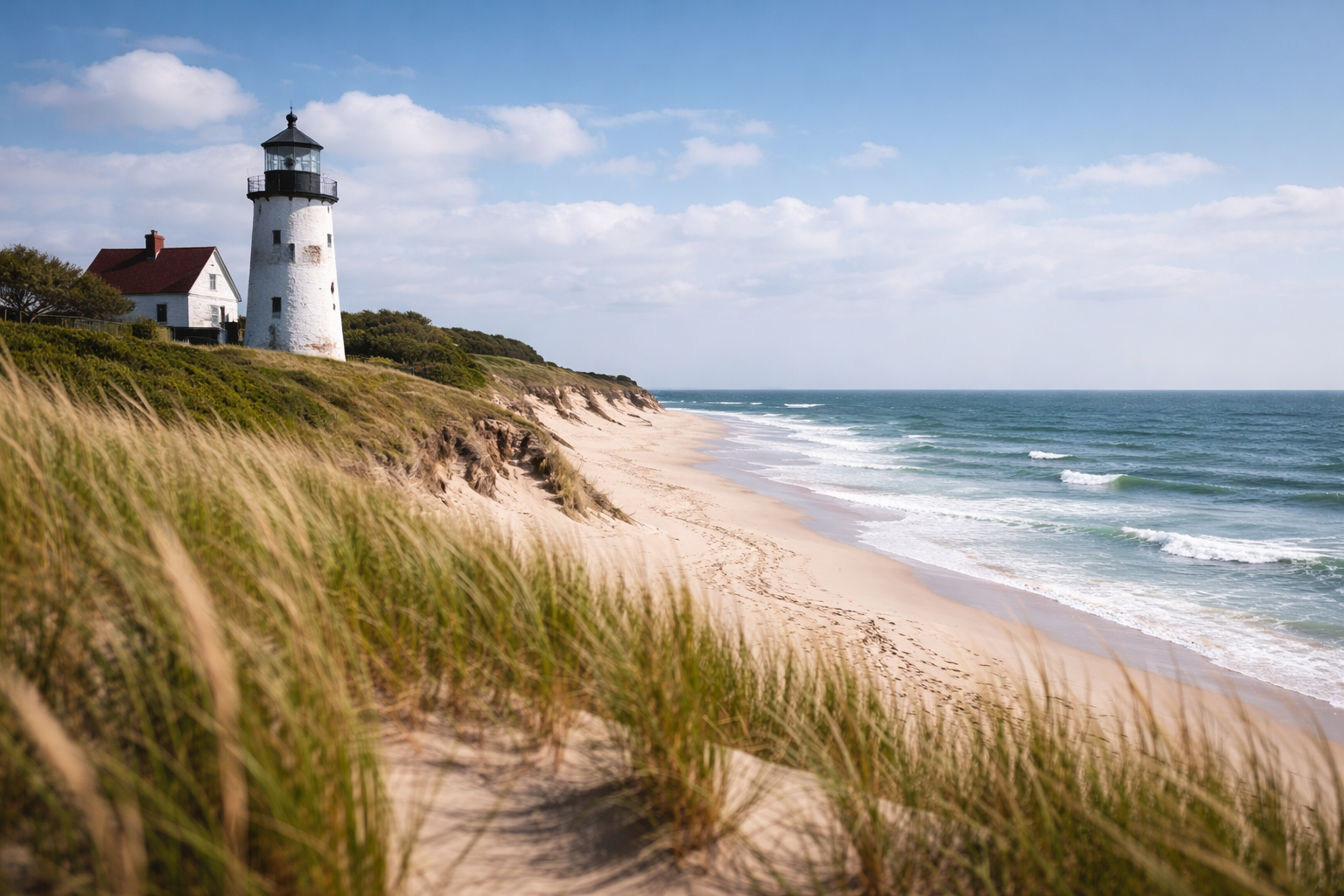
Chatham If Provincetown is a festival, Chatham is a chamber music concert. The town's Main Street is an almost improbably well-preserved example of classic New England commercial architecture, with no chain stores and a strictness about signage and design that other Cape towns have largely abandoned. The Chatham Fish Pier, where the inshore fishing fleet unloads daily at approximately 2–3 p.m. from late May through October, is one of the genuinely great free shows on the Cape — fishing boats reversing up to the dock, seals crowding the pier hoping for scraps, and buckets of haddock, flounder, and striped bass coming ashore. Chatham Light, a functioning Coast Guard lighthouse, offers free grounds access and one of the Cape's most photographed views across North Beach and the Atlantic. The Chatham Bars Inn, the town's landmark full-service resort, has been in continuous operation since 1914 and remains the standard-bearer for Cape Cod luxury hospitality, with rooms starting around $600/night in peak season 2026.
Falmouth The Upper Cape's largest town, Falmouth is the practical anchor of a Cape Cod family trip: ferry access to Martha's Vineyard via Steamship Authority (passenger ferry runs year-round; car ferry reservations for summer 2026 should be made in January), a working downtown with exceptional independent restaurants, and 68 miles of walking and cycling trails within the town's borders. Shining Sea Bikeway is a 10.7-mile paved trail from Falmouth center to Woods Hole that passes through salt meadows, ponds, and forests — the most scenic short cycling route on the Cape. Woods Hole itself, home to the Woods Hole Oceanographic Institution (WHOI), offers a free exhibit center at 15 School Street open Monday through Saturday in summer, giving you genuine scientific context for the marine environment you've been exploring all week.
Cape Cod Budget Breakdown 2026

A common planning mistake is underestimating what a Cape Cod vacation actually costs. Here is a realistic, itemized budget framework for a family of four spending one week in peak season (late June through August) versus shoulder season (September–October).
Accommodation - Peak season (3BR rental, Brewster/Dennis bay side): $6,000–$8,500/week - Shoulder season (same property): $3,200–$4,800/week
Transportation to Cape Cod - Round-trip airport car service, Boston Logan to Cape (family SUV, Cadillac Escalade or Chevrolet Suburban): $500–$680 total - Car rental pickup at Logan + gas for the week: $550–$750 total - Bay State Cruise ferry, Boston to Provincetown (family of four, round trip): $360
Beach Costs - National Seashore daily passes (if not using America the Beautiful pass): $25/day × 5 days = $125 - America the Beautiful Annual Pass (covers all National Seashore entry): $80 (recommended if visiting multiple federal parks in the year) - Town beach daily stickers (bay beaches): $20–$30/day
Food and Dining - Groceries for self-catering breakfasts and lunches (family of four, one week): $350–$500 - Dinners (mix of dining out 4 nights, self-catering 3 nights): $600–$900 - Lobster rolls, ice cream, clam shacks (budget these separately): $150–$250
Activities - Whale watch (family of four): $220–$280 - Bike rentals (4 bikes × 2 days): $280–$440 - WHOI exhibit center, Cape Cod Museum of Natural History (family): $50–$60 - Cranberry bog tour (family): $45–$60
Estimated Total (Peak Season, Family of Four) $7,700 – $11,200 for one week, excluding flights
Estimated Total (Shoulder Season, Family of Four) $4,700 – $7,200 for one week, excluding flights
The single biggest lever on your total budget is accommodation timing. Shifting three weeks from September to late August drops rental prices by $2,000–$4,000 on a typical property — with virtually no sacrifice in weather quality. Locals will tell you September is the best month of the year on the Cape, and the numbers back them up.
Plan this trip
When to Visit Cape Cod
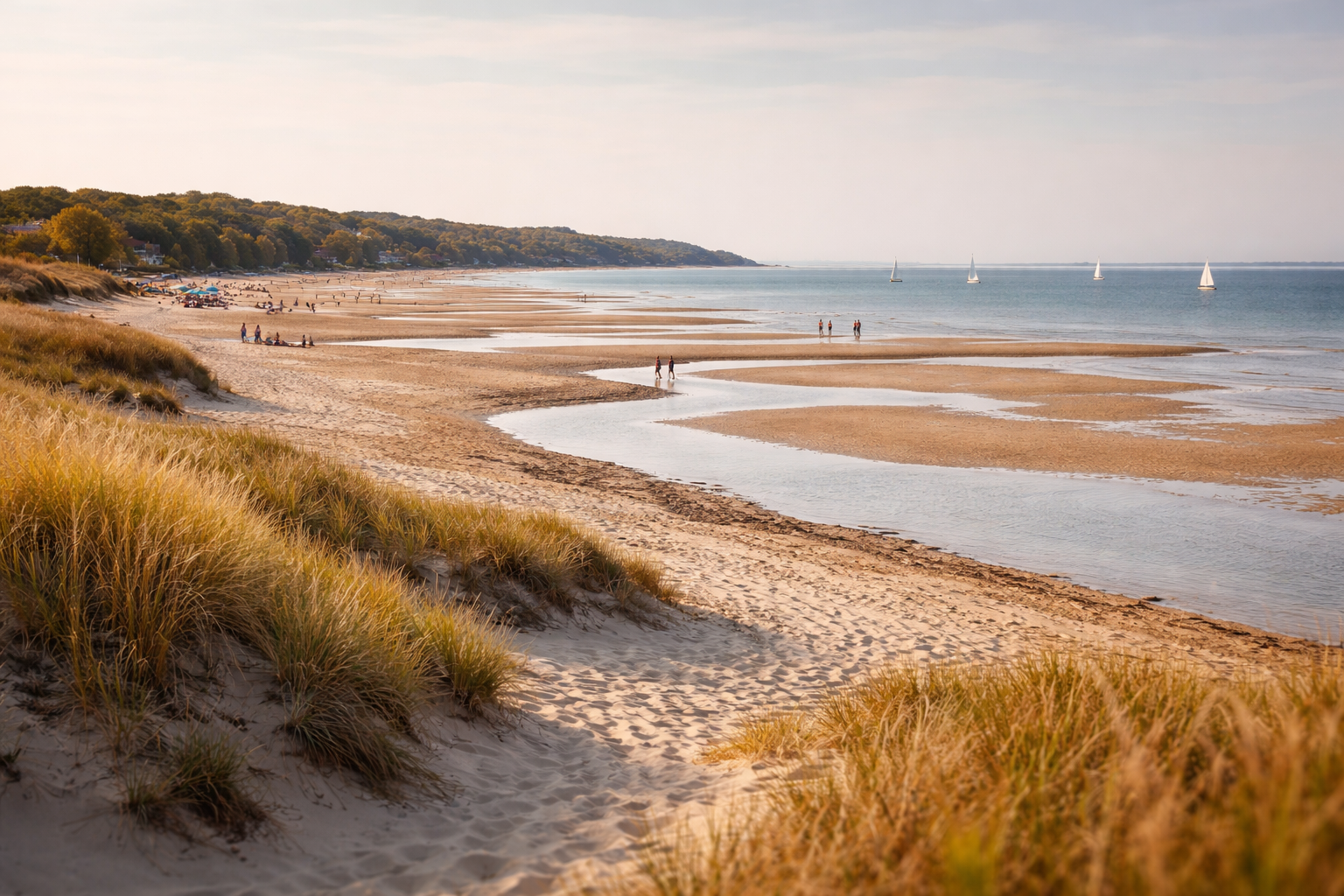
Timing is arguably the most consequential decision in planning a Cape Cod vacation. The experience varies more dramatically by season here than at most comparable coastal destinations, so choosing the wrong window can mean overpaying for crowds or arriving to find half of what you came for closed.
July–August (Peak Season) This is Cape Cod at full volume: maximum beach energy, all restaurants open, whale watches running daily, and Provincetown at its most electric. Water temperatures peak at 65–70°F on the ocean side, 72–76°F on the bay. The tradeoffs are real: the Sagamore Bridge backs up, parking at National Seashore beaches fills by 9 a.m. on weekends, and rental prices sit at their absolute ceiling. If you're traveling with school-age children, peak season is often unavoidable — just book accommodation and activities early, and budget accordingly.
June (Early Summer) Late June is our top recommendation for families who can manage the school calendar. Water temperatures are a few degrees cooler than July, but the beaches are less crowded, rental rates are 15–25% lower than peak, and restaurants are fully open without the wait times of midsummer. Memorial Day weekend through mid-June brings cooler, less predictable weather (average high of 65°F in early June vs. 78°F in late July).
September–October (Shoulder Season) September is the Cape's best-kept secret. Water temperatures retain their summer warmth through mid-September. Crowds thin dramatically after Labor Day. Restaurant reservations become available without weeks of advance planning. Rental prices drop significantly. The light takes on a golden, long-shadowed quality that fills travel photography. October adds foliage color to the inland forests and the drama of storm season beginning on the outer Cape — October northeasters are a Cape Cod experience unto themselves if you're not counting on beach days.
November–May (Off Season) Most rental properties are available at deep discounts, and the Cape's wild, austere winter character has its own powerful appeal. Many restaurants and shops close from November through April, but Provincetown, Chatham, and Falmouth maintain enough year-round businesses to sustain a visit. The Cape Cod Rail Trail is rideable year-round in dry weather. Birding in the off-season — the Cape sits on the Atlantic Flyway and hosts major shorebird and waterfowl migrations in October and March — attracts a dedicated community of naturalists.
Our Recommendation For a Cape Cod family trip with school-age children: the last two weeks of June 2026 offer the best balance of weather, cost, and crowd levels. For couples or adults-only groups: September 6–30, 2026 is the single best window of the year. For the absolute peak experience regardless of cost: the third week of July — and book everything (rental, restaurant reservations, whale watch, and ferry) at least six months in advance.
Frequently Asked Questions
Cape Cod is approximately 70–90 miles from downtown Boston, depending on your destination town. By car, the drive takes 90 minutes to 2.5 hours depending on traffic and bridge wait times. We recommend traveling mid-week or crossing the Sagamore or Bourne bridges before 11 a.m. or after 7 p.m. on Fridays to avoid peak congestion. A pre-booked car service from Boston Logan International Airport (Terminal B, C, or E depending on your carrier) to the Cape runs $180–$340 depending on vehicle type and destination. The Bay State Cruise Company fast ferry from Boston's Commonwealth Pier to Provincetown (2 hours 45 minutes, ~$90 round trip) is an excellent car-free option for those staying on the Lower Cape.
We recommend booking peak summer weeks (late June through Labor Day) no later than January 2026. The most desirable waterfront and walk-to-beach properties go under contract between October and February of the preceding year. Platforms like Vrbo allow you to filter by specific towns, property size, pet policy, and beach proximity. If you're flexible on exact dates, searching mid-week check-ins (Wednesday or Thursday) rather than the standard Saturday-to-Saturday can open up properties that are already booked for weekend-to-weekend windows.
Bay-side beaches are the clear recommendation for families with toddlers and young children. Skaket Beach in Orleans, Chapin Beach in Dennis, and Sandy Neck Beach in Barnstable all feature shallow, warm water (averaging 70–74°F by mid-July), minimal surf, and extensive tidal flats that are safe for small children to explore. These beaches also warm faster than ocean-facing Atlantic beaches. For families comfortable with light surf and older children, Coast Guard Beach in Eastham (Cape Cod National Seashore) is among the most beautiful and well-maintained beaches on the entire East Coast.
For a one-week peak season (July–August) Cape Cod family vacation, budget $7,700–$11,200 excluding flights. The largest single cost is accommodation: a three-bedroom rental near a bay beach in Brewster or Dennis runs $6,000–$8,500 per week in peak season. Shoulder season (September–October) brings total costs to approximately $4,700–$7,200 for the same trip profile, with rental rates 30–45% lower and no loss in beach quality. Key discretionary costs include whale watch excursions (~$220–$280 for a family of four), bike rentals ($280–$440 for two days), National Seashore beach parking ($25/day or $80/year with the America the Beautiful pass), and dining out four nights (~$600–$900).
For most visitors, a car provides the most flexibility, but it is not strictly necessary if you base yourself in Provincetown, Falmouth, or another walkable town center. The Cape Cod Regional Transit Authority (CCRTA) operates the Flex Route on-demand van service connecting Lower Cape towns for $2 per ride, and the P-Town Shuttle connects Provincetown to Truro and Wellfleet in summer. The 25-mile Cape Cod Rail Trail, with a bike rental station at multiple trailheads, can substitute for a car for beach access and town-to-town travel on the Mid and Lower Cape. For those arriving by air, pre-booking a car service from Logan or T.F. Green Airport is often more cost-effective and stress-free than renting a car at the airport and navigating bridge traffic.
Wellfleet OysterFest is scheduled for October 17–18, 2026, and is the Cape's most attended food festival, drawing approximately 15,000 visitors for freshly shucked local oysters, craft beer, and live music — book accommodations months in advance. The Provincetown International Film Festival returns in June 2026 (exact dates to be confirmed by organizers; historically held the third week of June). Chatham's summer band concerts in Kate Gould Park run every Friday evening from late June through Labor Day — a free, genuinely lovely local tradition. Cranberry bog wet harvests are viewable from late September through mid-October in Harwich and surrounding towns, with A&D Farms offering free self-guided walks September 25–October 12, 2026.