
First-Time Cruise Guide: Everything You Need to Know Before You Board
Choosing Your First Cruise Line
Picking the right cruise line is arguably the most important decision a first-timer makes — and it's one most people underestimate. Each major line targets a distinct demographic, price point, and onboard culture. Royal Caribbean skews active and family-friendly, with rock-climbing walls, surf simulators, and Broadway-caliber entertainment. Carnival is the value leader and party-forward, drawing multigenerational families and younger travelers. Norwegian Cruise Line (NCL) pioneered 'Freestyle Cruising,' meaning no assigned dining times and no formal nights, which many newcomers find liberating. Disney Cruise Line commands premium pricing but delivers an unmatched experience for families with young children. Celebrity and Holland America lean toward a more refined, adult-oriented atmosphere.
Itinerary matters as much as the ship itself. The Bahamas and Caribbean are perennial favorites for first-timers because they offer short sailings (3–7 nights), warm weather year-round, and ports that are easy to navigate independently. Alaska itineraries run May through September and deliver glacier and wildlife experiences that no land tour can replicate. Mediterranean cruises typically require 10–14 nights and longer flights, making them better suited to your second or third voyage once you know what to expect onboard.
Before you book, read recent reviews on CruiseCritic and Reddit's r/cruises — not the curated testimonials on the cruise line's own site. Forum members provide unfiltered accounts of ship conditions, service quality, and whether a specific vessel has undergone recent dry-dock renovations. Ship age and refurbishment history matter: an older ship that hasn't been dry-docked in five years will feel noticeably dated compared to a recently refurbished counterpart.
[Browse cruise lines and itineraries on CruiseDirect](https://www.dpbolvw.net/click-101692716-15734200?sid=travelplaninfo) to compare sailings across every major line in one place — filtering by departure port, duration, and price range makes narrowing your options far less overwhelming. If your travel dates are flexible, [last minute cruise deals on CruiseDirect](https://www.anrdoezrs.net/click-101692716-17037666?sid=travelplaninfo) can yield savings of 30–50% off brochure rates, particularly for cabins released within 90 days of sailing.
Embarkation Day: Your First Hours Onboard
The single most repeated piece of advice from experienced cruisers — repeated so often on CruiseCritic that it borders on gospel — is to arrive in your departure city the night before. Flights are delayed, luggage is lost, and cruise ships wait for no one. The ship will sail without you. A pre-cruise hotel stay near the port is cheap insurance against a catastrophic travel day.
Check in online through the cruise line's app or website 24–72 hours before departure. This generates your boarding pass, confirms your cabin assignment, and dramatically shortens embarkation lines. Once you're aboard, your cabin will not be ready until approximately 1:30–2:00 pm — which means your first hours onboard require a carry-on bag packed with everything you need: swimsuit, sunscreen, any medications (including seasickness prevention, which you should take before boarding, not after the nausea starts), phone charger, travel documents, and a change of clothes.
While the pool deck and Lido buffet are packed with newly boarded passengers, a quieter and genuinely superior option is the Main Dining Room, which typically serves a full-service sit-down lunch on embarkation day that most passengers don't know about. Once you've eaten, complete your eMuster safety drill immediately. Under SOLAS international maritime law, the ship cannot depart until every passenger has completed it. On Royal Caribbean, Celebrity, Holland America, Princess, and NCL, the eMuster process is digital: watch the safety video on the app or stateroom TV, then report to your designated muster station so a crew member can scan your SeaPass card. It takes under 10 minutes.
After muster, your priority list should read: register children for Kids Club programs (spots in popular sessions fill on Day 1), book specialty dining reservations and entertainment shows through the app, and get a drink to enjoy the sailaway from the top deck. The first departure from a home port — that slow, majestic pull away from the dock — is something first-time cruisers remember for decades.
Plan this trip
What to Pack (and What Gets Confiscated)
Cruise ship packing is a discipline, not an afterthought. Every bag passes through an X-ray machine at embarkation, and prohibited items are confiscated and held until disembarkation. The full banned list varies by line, but the universal prohibited items include: surge-protected power strips, extension cords, clothing irons and steamers, candles, drones, cannabis and CBD products (regardless of your home state's laws — ships operate under federal maritime jurisdiction), aerosol sprays, heating pads, electric kettles, scissors over four inches, and weapons of any kind.
Note a critical change for Royal Caribbean passengers: since September 2024, RC bans ALL power strips, including non-surge-protected models. Every other major line still permits non-surge power strips. If you're sailing RC, bring a USB-C GaN multi-port charging hub instead — it handles six devices simultaneously and fits in your palm.
Beyond prohibited items, the packing list that experienced cruisers swear by includes items you'd never find on a generic travel packing guide. Magnetic hooks with 30-pound capacity (cabin walls are magnetic steel, not drywall) turn bare walls into hanging storage for hats, bags, and lanyards. An over-door shoe organizer — the single most-recommended cabin hack on CruiseCritic forums — becomes a command center for sunscreen, chargers, toiletries, and cards. A lanyard with an ID holder keeps your SeaPass card accessible at all times. A waterproof phone pouch protects your device at the pool and on water excursions. Wrinkle-release spray replaces the iron you can't bring. A small nightlight is genuinely useful in interior cabins, which are completely dark when the lights are off.
On the clothing front, experienced cruisers consistently advise packing half of what you think you need. Sea days are overwhelmingly swimsuit-and-sandals affairs. Bring two to three swimsuits since one wet suit won't dry overnight in a humid cabin. Extra underwear always earns its weight in the suitcase. And buy your SPF 50+ sunscreen before you sail — a small bottle runs $15–25 in the onboard gift shop.
OTC Medications and Seasickness Prevention
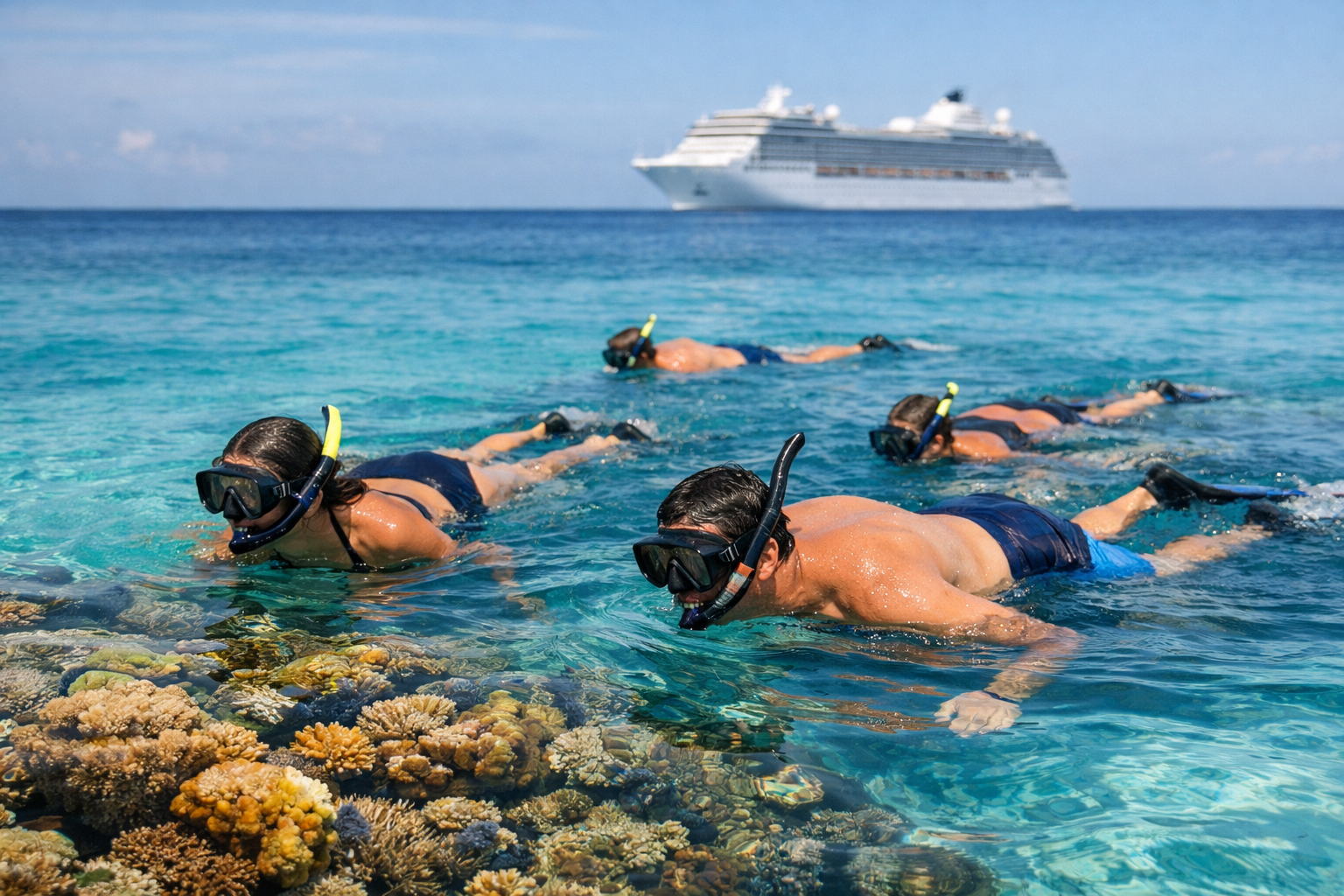
One of the most important — and most ignored — aspects of how to plan a cruise vacation is medical preparation. Cruise ship medical centers are equipped for emergencies, not pharmacies. The onboard gift shop carries a limited OTC section, and pricing is punishing: expect to pay two to five times retail. Disney Cruise Line runs approximately 20% above retail even at their most competitive. If you need Pepto-Bismol on Day 3 of a seven-night sailing, you will pay dearly for forgetting it at home.
Your essential OTC kit should include: Bonine or generic meclizine for seasickness (the preferred choice among frequent cruisers — it's less drowsy and longer-lasting than Dramamine), standard Dramamine if you want fast action and don't mind sedation, Tylenol and Advil, Pepto-Bismol, Imodium, Band-Aids, SPF 50+ sunscreen, aloe vera for sunburns, hand sanitizer, saline nasal spray, and cough drops. 'Cruise cough' — a persistent dry cough caused by recycled air and close-quarter ventilation — is common enough that it has its own name among seasoned passengers.
For seasickness specifically, the most effective prescription option is the scopolamine patch, applied behind the ear at least eight hours before departure and lasting 72 hours. It requires a prescription but is worth getting from your doctor if you're sailing rough waters (North Atlantic, Alaska in shoulder season, or the crossing from Florida to Nassau in winter). Over-the-counter, meclizine (Bonine) is the consensus pick for everyday use. Non-pharmaceutical approaches with documented efficacy include Sea-Band acupressure wristbands, which apply pressure to the P6 point on the inner wrist, ginger candies, and — surprisingly — green apples. Multiple cruise lines stock green apples specifically for this purpose, and crew members from Royal Caribbean to Princess have confirmed the practice. Fresh air and keeping your eyes on the horizon are also genuinely helpful because your inner ear and visual system stop sending conflicting signals.
If you're prone to motion sickness, cabin placement makes a measurable difference. A midship cabin on a lower deck sits at the ship's fulcrum — the point of minimum movement. Bow cabins on upper decks experience the greatest pitch and roll. A balcony cabin provides a horizon reference that an interior cabin cannot, which helps your brain reconcile vestibular inputs. For more expert travel health packing advice, visit our comprehensive [travel essentials guide](/travel-essentials-guide/) for additional tips on staying healthy on the road.
Plan this trip
WiFi and Staying Connected at Sea
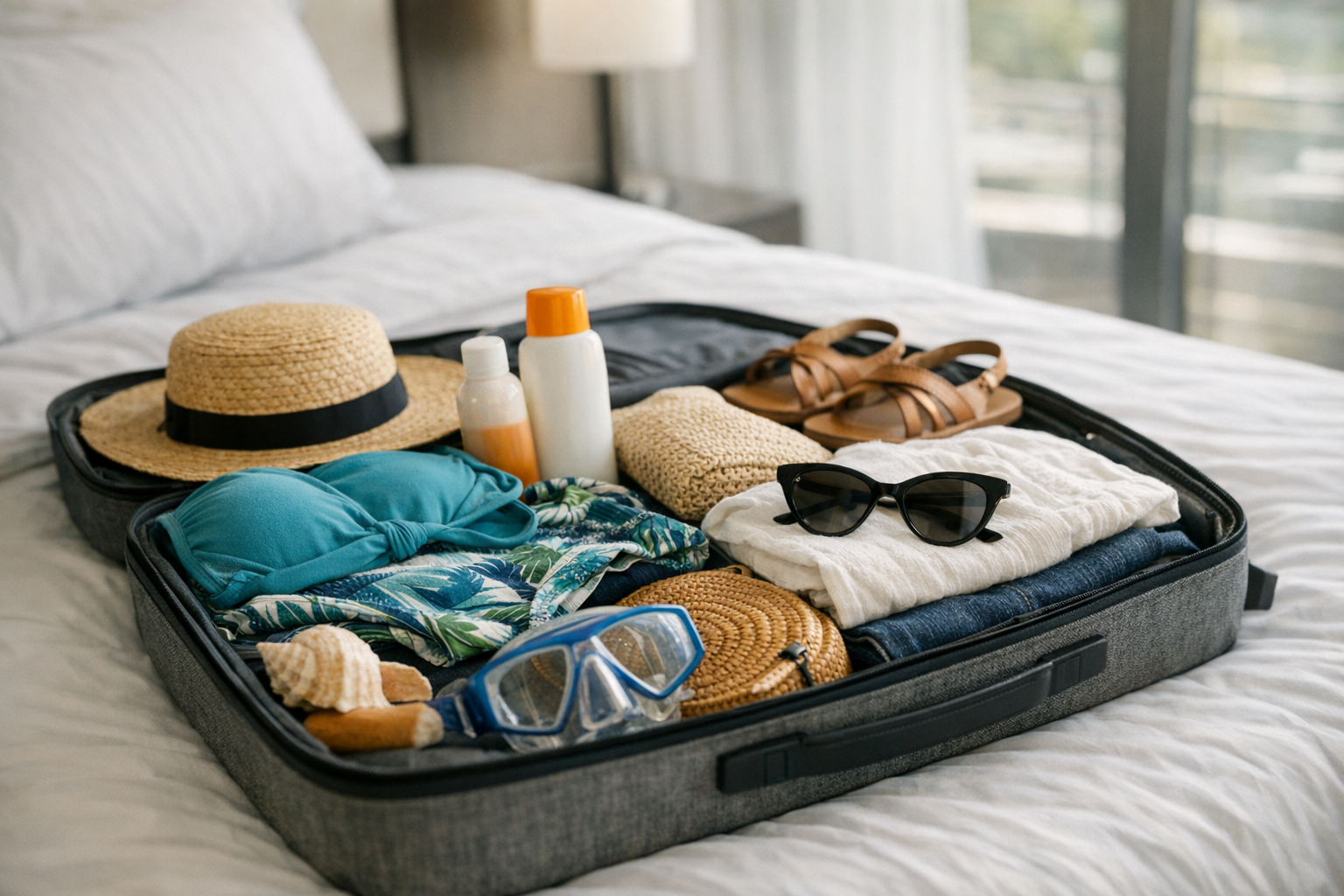
Connectivity at sea has improved dramatically since the rollout of Starlink maritime service. Royal Caribbean, Celebrity, Holland America, and Princess all operate Starlink-enabled fleets, delivering real-world speeds of 10–15 Mbps — sufficient for video streaming, video calls, and working remotely. Older satellite ships on lines that haven't upgraded are considerably slower and less reliable.
Pricing varies by line and should be purchased before you sail. Royal Caribbean's VOOM Surf+Stream package runs $17.99–$39.91 per device per day, with median pricing around $20. Purchasing pre-cruise saves 20–35% compared to buying onboard. Carnival offers tiered packages: Social at $20.40/day (social media only), Value at $23.80/day, and Premium at $25.50/day. NCL includes WiFi with its 'Free at Sea' promotional package, making it effectively the best connectivity value on mainstream lines when that offer is available.
For families or groups looking to minimize costs, strategies vary. On Royal Caribbean, one purchased package can technically be shared by logging in and out on different devices — though it's inconvenient. Carnival's Premium Multi-Device package at $90/day covers up to four devices simultaneously, which for a family of four works out to $22.50 per person — roughly equivalent to per-device pricing with far less hassle. Some cruisers bring a WiFi 6 travel router to share a single login across multiple devices, though this approach sits in a gray area with most cruise line terms of service, so review the fine print before attempting it.
One consistently useful tip: download everything you want to watch before departure. Netflix, Disney+, and Spotify all offer offline download features. A tablet loaded with downloaded content eliminates the need for streaming bandwidth entirely during sea days.
Alcohol Policies and Drink Packages
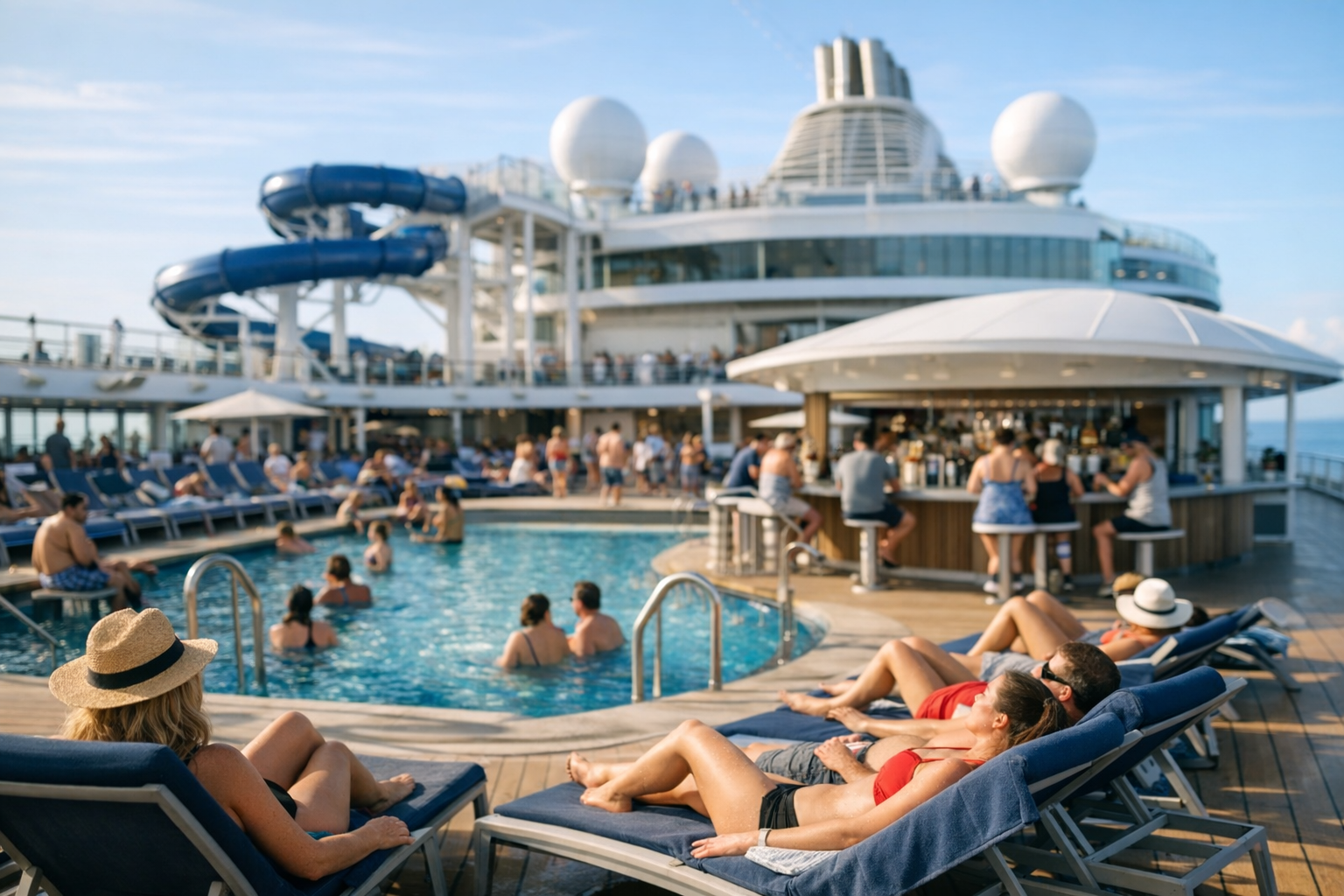
Understanding alcohol policies before you board prevents both disappointment and unnecessary expense. Most major lines permit passengers to carry one bottle of wine or Champagne per person in their carry-on at embarkation — Royal Caribbean and Carnival both follow this rule. MSC, however, permits zero alcohol at embarkation, with no exceptions. Beer and hard liquor are universally banned as carry-on items across every mainstream line.
Duty-free alcohol purchased in port is a common source of confusion. You can buy it, but crew will confiscate it when you re-board at the pier. It's held securely and returned to you the final night before disembarkation. This is standard policy across all lines, not selective enforcement.
Drink packages are the subject of endless debate in cruise forums, and the math deserves honest examination. Royal Caribbean's Deluxe Beverage Package runs $56–$120 per person per day depending on sailing length and when you purchase. Carnival's CHEERS! package runs approximately $82.54 per person per day. NCL's Premium Beverage Package adds $49.99 per person per day on top of base fares. Critically, every single package adds an 18–20% automatic gratuity on top of the listed price — a detail buried in the terms that inflates the real cost significantly.
The break-even calculation is straightforward: at an $80/day package price, you need to consume roughly six cocktails or eleven beers per day to come out ahead. Most moderate drinkers won't reach that threshold consistently. The key logistical restriction: most lines require all adults sharing a cabin to purchase the same package. You cannot buy it for one person if your cabinmate declines. If you're a light drinker paired with a heavier-drinking travel companion, the math rarely works in your favor. Our [cruise budget planning guide](/cruise-budget-planning/) walks through exactly how to calculate whether a drink package makes financial sense for your specific sailing.
Plan this trip
Dining, Dress Codes, and Formal Nights
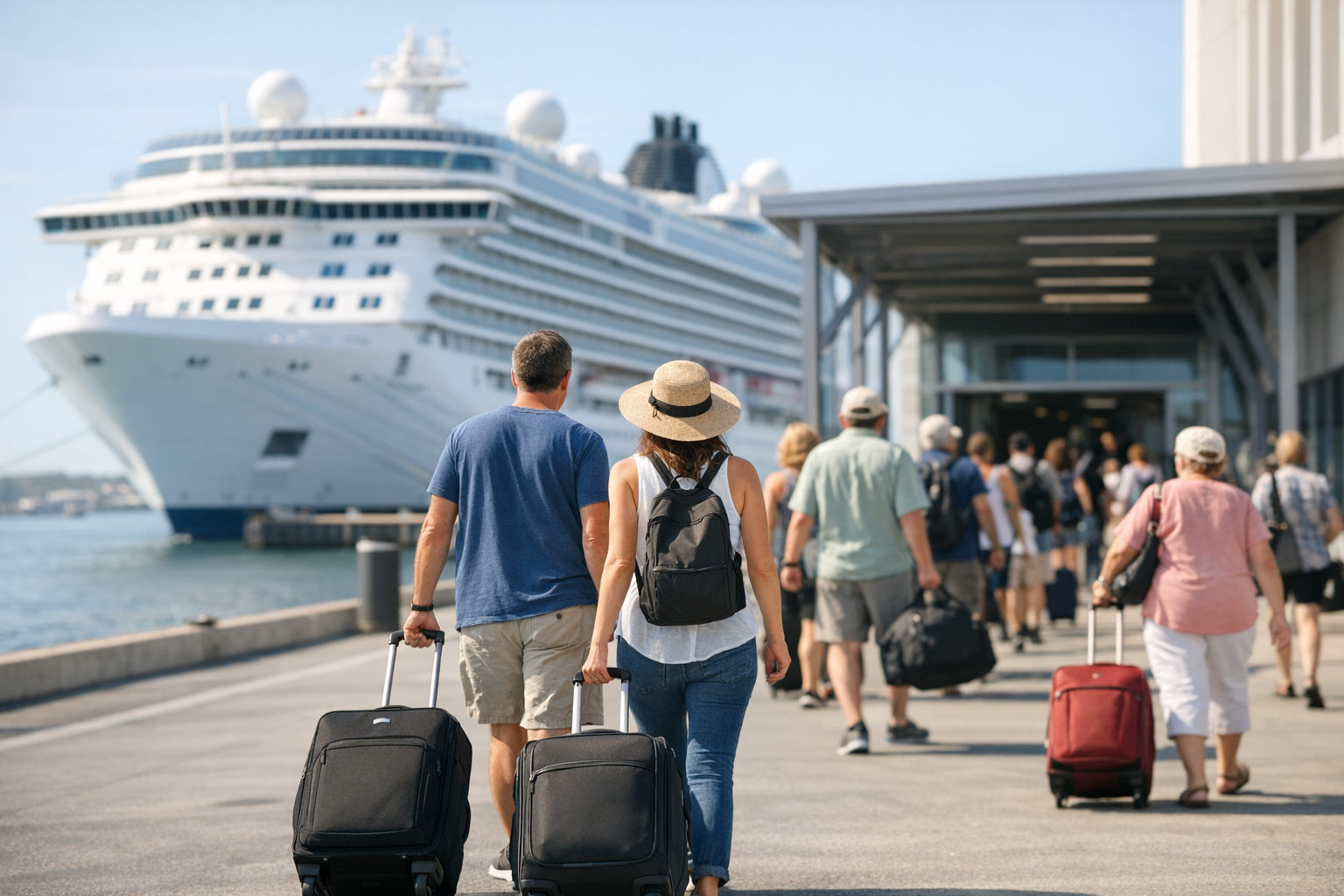
Modern cruise dining is far more varied than the traditional two-seating, one-venue model that defined cruising for decades. Every mainstream ship offers complimentary dining across multiple venues: the Main Dining Room (MDR) serves a full-service, rotating menu dinner nightly; the Lido buffet operates for breakfast, lunch, and dinner; and most ships include casual complimentary options like pizza, burger counters, and soft-serve ice cream stations. Continental breakfast via room service is also generally included.
Specialty restaurants command surcharges, and for good reason — the experience is categorically different from complimentary dining. Royal Caribbean specialty dining ranges from $23 to $110 per person for adults (children ages 6–12 pay approximately $15, and children under five dine free). Premium venues charge a no-show fee of around $50 if you cancel without adequate notice, so treat a reservation at Wonderland or Chops Grille the way you'd treat a reservation at a serious land-based restaurant. Book specialty dining 90 days before departure through the cruise line app — popular venues on short sailings sell out quickly.
Dress codes in 2025 are far more relaxed on mainstream lines than their reputations suggest. 'Resort Casual' is the standard for Main Dining Room evenings: no swimsuits, no tank tops, no flip-flops. Smart Casual applies to specialty restaurants. Formal nights — typically one or two per seven-night sailing — carry a suggestion of dark suits or cocktail dresses. Tuxedos and evening gowns are not necessary on Carnival, Royal Caribbean, NCL, or MSC. A sport coat and button-down shirt reads perfectly appropriate for a man on formal night. NCL has eliminated formal nights entirely under its Freestyle Cruising concept. Disney replaces one formal night with the enormously popular Pirate Night deck party, which has its own separate dress theme. If formal dining isn't your preference on designated nights, the buffet carries no dress code whatsoever, and room service remains available.
Gratuities, Onboard Spending, and Hidden Costs
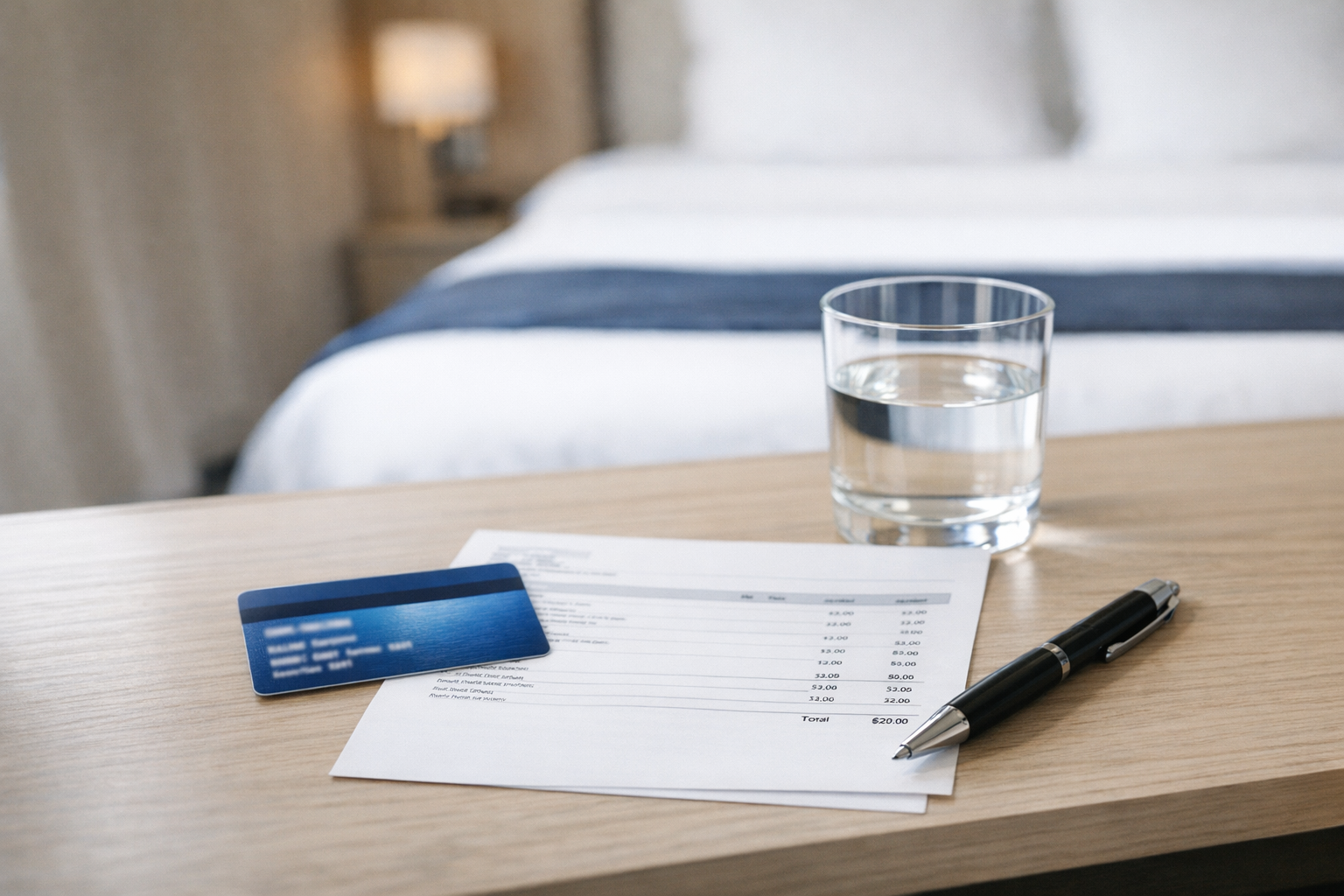
Gratuities are the line item that surprises first-time cruisers most dramatically, primarily because they're baked into the booking process as an afterthought. Automatic daily gratuities — charged to your onboard account and distributed among cabin stewards, dining room waiters, assistant waiters, and hotel staff — vary by line: Royal Caribbean charges $18.50 per person per day (suites pay $21), Carnival charges $16 (rising to $17 in April 2026), NCL charges $20 (the highest among mainstream lines), Disney charges $14.50, Celebrity charges $18, and MSC charges $16.
For a family of four on a seven-night Royal Caribbean sailing, that's $18.50 × 4 × 7 = $518 in auto-gratuities before a single drink is ordered. The forum consensus is clear: leave auto-gratuities in place and tip extra cash for genuinely exceptional service from individual crew members. Removing tips entirely is widely discouraged — gratuity pools are how service staff earn meaningful wages.
Beyond the auto-grat, your cabin steward and assigned dining room waiter are the two crew members who serve you personally every single day. Seasoned cruisers tip their cabin steward $20–50 in cash at the end of the voyage (handed directly in an envelope on the last night), and the same for their dining room waiter if service was strong. This is separate from the pooled auto-gratuity and goes directly into their pocket. Room service delivery also warrants a $2–5 cash tip per order — the 18% auto-charge on room service goes into the pool, not to the person who carried your tray at midnight.
Beyond gratuities, onboard charges accumulate faster than most passengers expect. Every bar drink, spa treatment, and specialty dining reservation adds an automatic 18% gratuity on top. A spa massage priced at $119–200 becomes $140–236 with gratuity added. Photos packages run $100–350 depending on quantity. Specialty coffee drinks cost $3–6 each. Laundry runs $2–3 per item. Fitness classes cost $12–25. The casino's slot machines operate at 80–90% return-to-player rates — worse than land-based casinos. Arcade games run $0.75–2 per play.
Your SeaPass (or Sail & Sign) card functions simultaneously as your room key, boarding card, and charge account. Review your onboard account through the cruise line app daily — errors are not uncommon, and catching them early avoids a long queue at Guest Services on the final night. Set spending limits or disable charging privileges entirely on children's cards at Guest Services on Day 1. For realistic budget planning, allocate $100–150 per person per day above your cruise fare for onboard spending. For a family of four on a seven-night sailing, total add-on costs — gratuities, WiFi, drink packages for two adults, specialty dining, and shore excursions — realistically range from $2,048 to $4,810 above the base fare.
Plan this trip
Shore Excursions: Ship vs. Independent
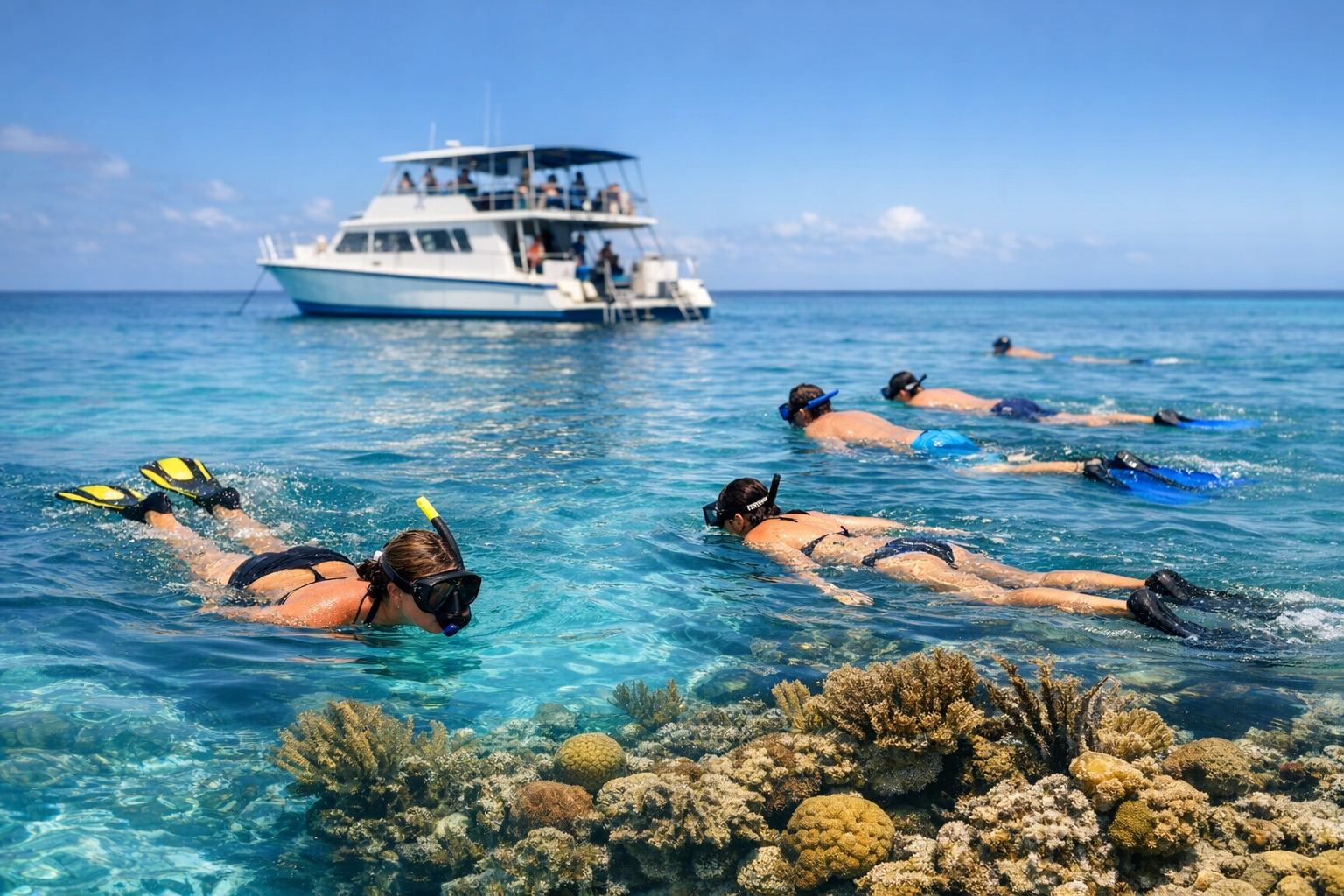
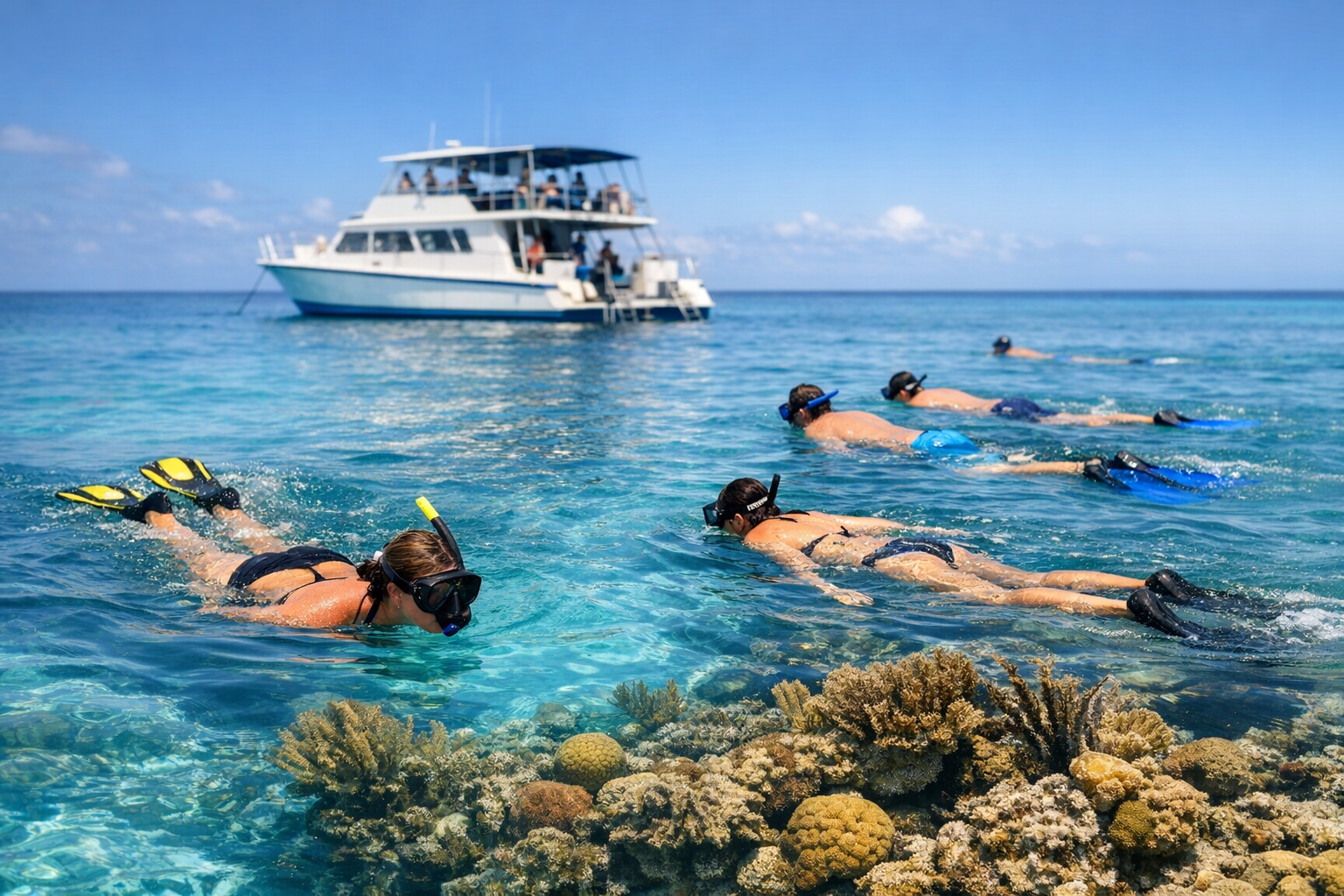
The shore excursion debate is one of the most active threads on any cruise forum, and the answer is genuinely situational rather than categorical. Ship-organized excursions offer one irreplaceable guarantee: if a ship-booked tour runs late, the ship waits for you. That's a written policy, not a courtesy. Independent tours carry no such guarantee — the ship has zero legal or operational obligation to delay departure for a late independent group, even if the entire tour is delayed through no fault of the passengers.
That said, ship excursions carry meaningful trade-offs. Groups are typically large (30–50 people), commentary can be rushed, pricing runs a significant premium ($100+ per person is common for mainstream excursions), and you're often channeled toward the same tourist infrastructure as every other ship in port.
Independent tours through operators like Viator, local taxi cooperatives, or port-specific guides typically run 40–60% cheaper, accommodate smaller groups (often 8–15 people), and offer more flexibility in pacing. The key is selecting experienced operators with substantial recent reviews — not operators with five reviews from 2019.
The experience-based strategy that experienced cruisers converge on: book ship excursions for short port days under six hours and for tender ports (where you're ferried ashore by small boat rather than docking directly, adding time pressure). For port days of eight hours or more, independent exploration is almost always worth considering. In ports where major attractions are within walking distance of the pier — Nassau's downtown, Cozumel's beach clubs, Juneau's Red Dog Saloon — skipping organized tours entirely and exploring on foot is often the most satisfying approach. Always carry the ship's port agent phone number as a backup, and ensure your passport is in your possession rather than locked in your cabin safe. Read our [shore excursion planning guide](/shore-excursion-planning/) for a breakdown of the best independent operators by port.
Kids Clubs, Entertainment, and Onboard Fun
Modern cruise ships have invested heavily in youth programming, and the quality gap between the best and most basic offerings is significant. Royal Caribbean's Adventure Ocean accepts children ages 3–12 at no additional charge until 10 pm; after-hours care runs $15 per child per hour. The Navigator and Voyager classes feature the iconic FlowRider surf simulator and rock-climbing wall as signature activities. The Teen Zone for ages 13–17 is unsupervised — teens check in and out independently, which suits most families but warrants discussion with younger teens before sailing.
Carnival's Camp Ocean divides children into three age cohorts: Penguins (ages 2–5), Stingrays (6–8), and Sharks (9–11). Disney Cruise Line's Oceaneer Club is broadly regarded as the gold standard in cruise youth programming, accepting ages 3–10 with complimentary enrollment and operating from 9 am to midnight — the most expansive hours in the industry. Disney also offers separate programming for tweens (Edge) and teens (Vibe).
For all lines, register your children for clubs on Day 1 — popular activity slots fill quickly. Bring allergy documentation. Most clubs require children to be potty-trained.
For adults, one of the best-kept secrets of cruising is how much entertainment is completely free. Every mainstream ship runs nightly productions in the main theater at no extra charge — Royal Caribbean's Quantum-class ships stage full Broadway productions including Mamma Mia and We Will Rock You, while Carnival runs its Playlist Productions series across the fleet. Comedy clubs run multiple shows per evening on most ships, with family-friendly performances earlier and adults-only late-night sets (Carnival's Punchliner Comedy Club averages 20 shows per ship per week). Live music rotates through bars and lounges throughout the day and night. Deck parties, trivia competitions, poolside movie screenings on the giant LED screen, and themed dance nights all come included in your fare. Book headliner shows through the cruise line app before departure — popular productions frequently sell out before sailing. Carnival uses first-come, first-served seating for most shows, so arrive 15–20 minutes early.
The casino is a world of its own, and it operates on a schedule that catches first-timers off guard: it opens only when the ship reaches international waters (12+ nautical miles from shore) and closes every time the ship enters port. On a port-intensive Caribbean itinerary, that can mean limited gambling hours. Sign up for the Players Club on Day 1 — it's free and typically earns you complimentary drinks while actively playing, plus tournament invitations and future cruise discounts. Be aware that shipboard slot machines operate at 80–90% return-to-player rates, noticeably worse than the 92–97% RTP at land-based casinos. Watch for 6:5 blackjack payouts instead of the standard 3:2 — check the table placard before sitting down, as 6:5 significantly increases the house edge. Any jackpot of $1,200 or more triggers a W-2G tax form — the cruise line reports directly to the IRS regardless of where you're sailing. Cash advances are available but come with 3–5% fees on top of your credit card's cash advance rate, so bring cash if you plan to play.
Plan this trip
Where to Stay Before Your Cruise
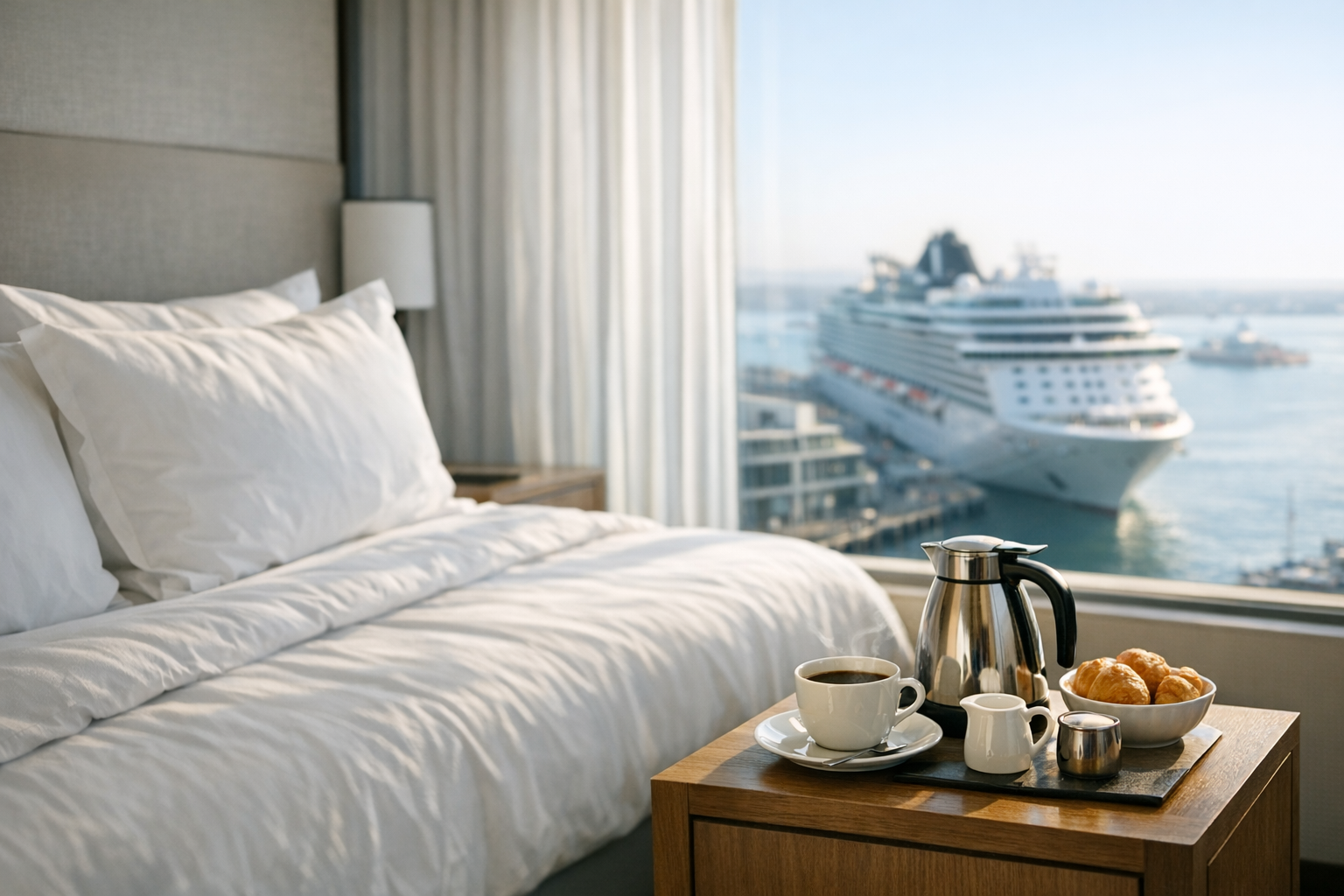
Staying near the cruise terminal the night before departure isn't optional for first-time cruisers — it's essential risk management. A delayed flight that arrives at 11 pm is a minor inconvenience when your hotel is a five-minute taxi ride from the port. That same delay, if you flew in the morning of departure, is a disaster that no travel insurance policy makes emotionally painless.
Port cities vary significantly in their hotel landscape. Miami's downtown and Brickell neighborhoods place you within minutes of PortMiami, which handles more cruise passengers annually than any other port in the world (over 7 million in FY2023). Fort Lauderdale's Port Everglades is within 10 minutes of the beach hotels along A1A. Galveston, Texas — the primary Gulf Coast departure hub — has charming Victorian-era B&Bs in the historic Strand district, within walking distance of the cruise terminals. Seattle's Bell Street Cruise Terminal is walkable from several downtown hotels, making it one of the most logistics-friendly Alaska departure points.
When choosing where to stay, prioritize properties that offer port shuttle service. Many airport-adjacent hotels near Fort Lauderdale, Tampa, and Baltimore offer complimentary shuttles to the pier — a detail that dramatically simplifies morning logistics when you have multiple bags and a group to coordinate.
[Find hotels near cruise ports with Hotels.com Member Prices](https://www.dpbolvw.net/click-101692716-15612526?sid=travelplaninfo) to compare properties sorted by proximity to your departure terminal. Member pricing frequently delivers 10–15% below the standard rate on the same rooms, and the reward night structure (every ten nights earns one free) adds cumulative value if you cruise multiple times per year.
Renting a Car for Your Cruise Port
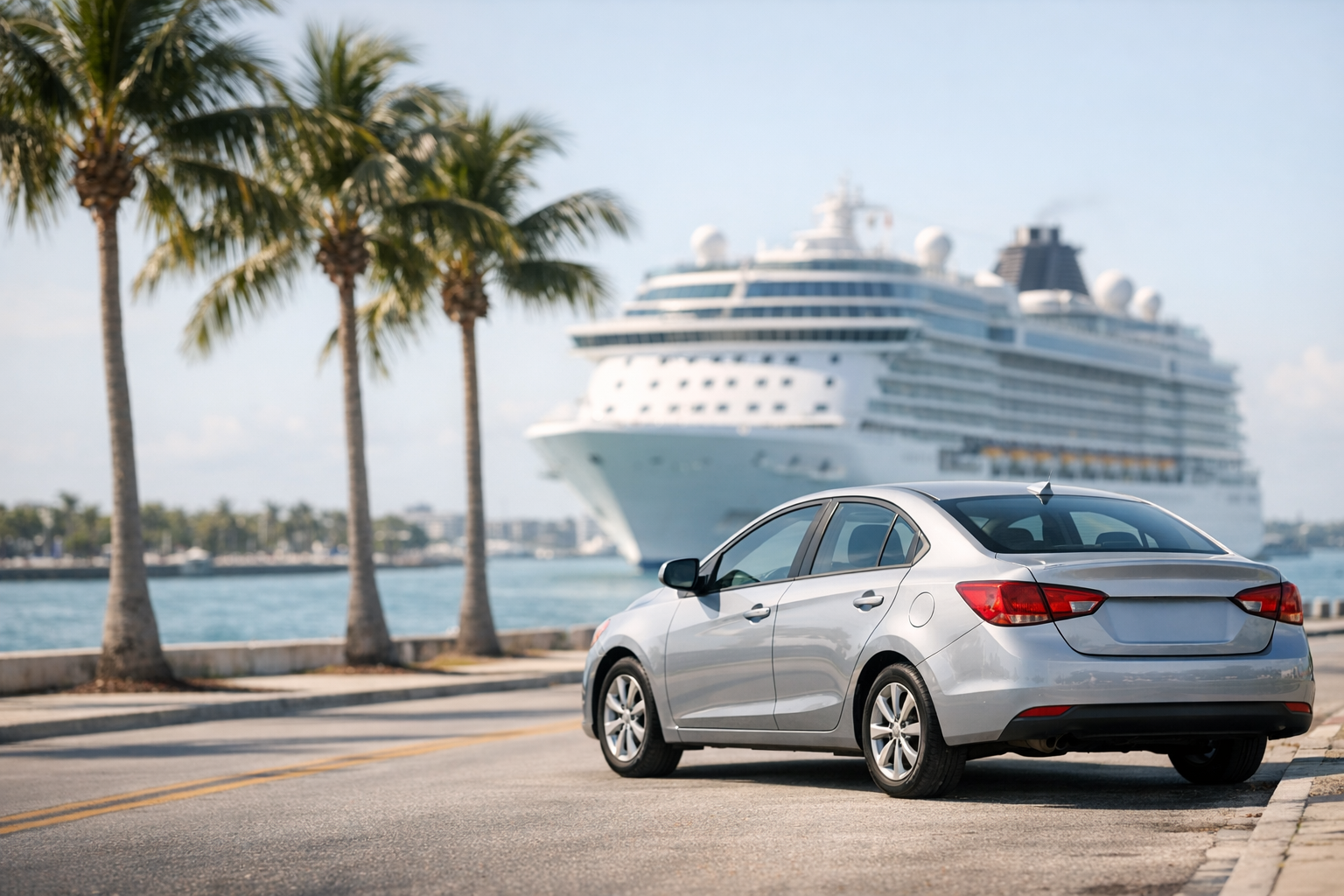
A rental car serves a different function depending on where you're sailing from. For passengers driving to nearby ports, a car is obviously not necessary. For those flying in, however, a rental can transform an otherwise rigid travel day into a genuinely flexible experience — particularly when you have extra hours before embarkation or plan to spend a day exploring the port city after disembarkation.
Miami and Fort Lauderdale both have rental car facilities within close proximity to the cruise terminals. If you arrive the afternoon before sailing, a rental car lets you visit Wynwood Walls, eat a proper South Florida seafood dinner, and drop the car at a nearby return location before Uber-ing to the pier in the morning. In Seattle, a rental car gives Alaska-bound cruisers the option to spend a day in the city or take the scenic drive south through Tacoma before returning the vehicle the morning of sailing.
Post-cruise, a rental car is particularly valuable at ports like Tampa, Baltimore, or New York/Bayonne, where onward travel options are less abundant than in Miami or Fort Lauderland. Driving yourself from the port eliminates the chaos of competing with hundreds of fellow disembarking passengers for limited taxis and rideshares.
Rental rates vary significantly by booking timing and provider. [Compare car rental rates near cruise ports on EconomyBookings](https://www.anrdoezrs.net/click-101692716-15736982?sid=travelplaninfo) to find competitive pricing from major and independent suppliers. Booking 2–3 weeks in advance consistently yields better rates than booking within a week of travel, and choosing a return location slightly away from the port itself (an airport location, for instance) sometimes unlocks lower pricing due to higher fleet turnover.
Plan this trip
Disembarkation: Getting Off the Ship Smoothly
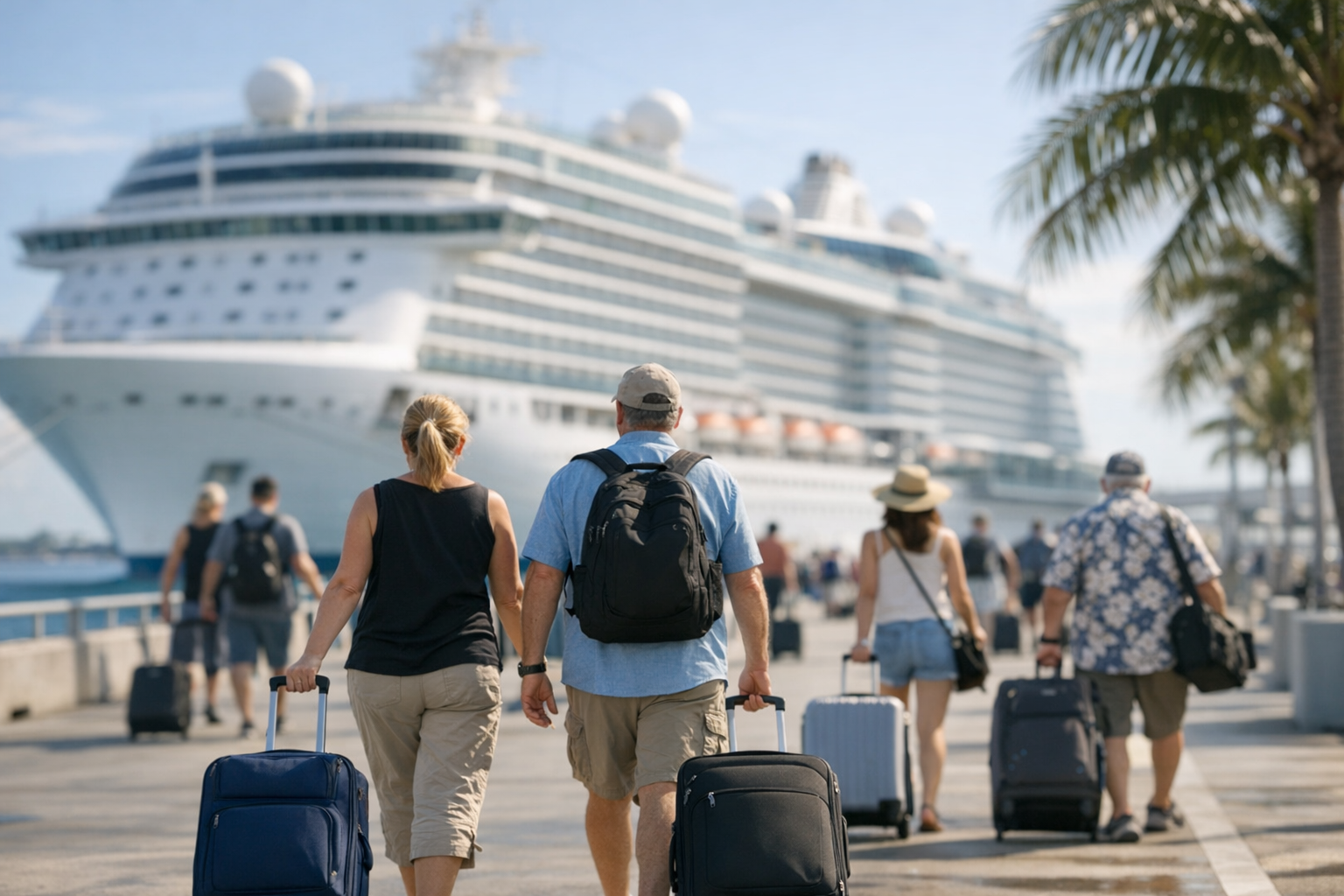
Disembarkation is the part of a cruise that most first-timers don't think about until the night before it happens — and that's a mistake. A smooth departure requires preparation that begins at least 24 hours before you step off the gangway.
There are two primary disembarkation methods. Self-assist disembarkation means you carry all of your own luggage off the ship independently. The advantage is timing: self-assist passengers leave first, typically starting around 7:30 am as the ship clears customs. If you have an early flight or a long drive home, this is your best option. The tradeoff is physical: you're managing every bag through crowded corridors and gangways.
Porter-assisted (or traditional) disembarkation means placing your larger bags outside your cabin door the night before departure, between 10 pm and 11 pm, with the color-coded luggage tags the ship distributes. Your bags are collected overnight and staged in the terminal by group color. You depart the ship by group number, typically between 8:00 and 10:30 am, and collect your bags in the terminal.
The night before disembarkation, complete a checklist: settle your onboard account and review every charge (errors are caught most easily before you leave, not after). Clear your cabin safe — it's the number-one forgotten item, and retrieving a passport left behind in a ship safe is genuinely complicated. Collect any duty-free alcohol from the designated passenger lounge (it's distributed the final evening). Remove old luggage tags from your bags to prevent routing confusion.
If you're doing self-assist, wake early and have breakfast at 6 am. Most ships begin clearing customs documentation at 7:00–7:30 am, and the earliest self-assist groups typically walk off shortly thereafter — before the terminal crowds materialize. Have your passport and customs declaration form organized and accessible, and know your onward transportation plan in advance. The post-cruise taxi and rideshare scramble at major ports is real, and calling your car service or booking a rideshare before you exit the terminal building saves considerable time.
Frequently Asked Questions
Budget $100–150 per person per day above your cruise fare for onboard spending. For a family of four on a seven-night sailing, total add-ons — including auto-gratuities ($448–560), WiFi ($126–280), drink packages for two adults ($784–1,680), specialty dining ($120–440), and shore excursions ($200–800) — realistically range from $2,048 to $4,810 above the base fare.
Automatic daily gratuities are charged to your onboard account and cover cabin stewards, dining staff, and hotel services. Rates range from $14.50/person/day (Disney) to $20/person/day (NCL). These are separate from the 18% gratuity automatically added to every bar drink, spa treatment, and specialty dining charge. The strong recommendation from seasoned cruisers is to leave auto-gratuities in place and tip extra cash for exceptional individual service.
A midship cabin on a lower deck sits at the ship's natural fulcrum — the point of minimum movement. Avoid bow cabins on upper decks, which experience the most pitch and roll. A balcony cabin provides a horizon reference that helps your brain reconcile vestibular signals. Take meclizine (Bonine) before boarding if you're prone to motion sickness — not after symptoms begin.
Most lines (including Royal Caribbean and Carnival) permit one bottle of wine or Champagne per person in carry-on luggage at embarkation. Beer and hard liquor are universally prohibited. MSC permits zero alcohol at embarkation. Duty-free alcohol purchased in port is confiscated upon re-boarding and returned the final night before disembarkation.
Yes — completing your muster (safety) drill is required by SOLAS international maritime law before the ship can depart. Most major lines now use a digital eMuster system: watch a safety video via the app or stateroom TV, then visit your muster station to have your card scanned. If you skip it, crew will locate you by cabin number. The process takes under 10 minutes and should be completed immediately after boarding.
Ship excursions guarantee the ship will wait if your tour runs late — a meaningful protection in short port days or tender ports. Independent tours typically run 40–60% cheaper and offer smaller, more personalized groups but carry no delay protection. Use ship-booked excursions for port days under six hours and tender ports; consider independent operators for eight-hour or longer port stops.
Items universally confiscated include surge protectors, extension cords, clothing irons and steamers, candles, drones, cannabis and CBD products, aerosol sprays, heating pads, electric kettles, scissors over four inches, and weapons. Since September 2024, Royal Caribbean bans all power strips including non-surge models — bring a USB-C GaN charging hub instead. Most other lines still permit non-surge power strips. Confiscated items are held and returned at disembarkation.
Ships equipped with Starlink (Royal Caribbean, Celebrity, Holland America, Princess) deliver real-world speeds of 10–15 Mbps — sufficient for video calls and streaming. Pre-purchasing WiFi packages saves 20–35% compared to buying onboard. Royal Caribbean's VOOM Surf+Stream runs approximately $20/day pre-purchased. NCL includes WiFi with its 'Free at Sea' package. Download movies and music before departure to reduce reliance on onboard bandwidth.