
The Short Answer: How to Do Rome, Florence and Venice
The best Rome, Florence and Venice itinerary for first-timers is a one-way line of three bases: Rome first, Florence second, Venice last. Seven days works if you accept a brisk pace. Ten days is far more comfortable. High-speed trains link all three cities, so you unpack only three times and never need a rental car.
For seven days, we recommend three nights in Rome, two in Florence and two in Venice. With ten days, add one night to each city and use the extra time for a day trip. Everything below is built around that structure, along with the logistics we think matter most: train legs, timed-entry tickets, where to sleep, and when to go.
One caution before we begin. Italy rewards slowing down, and three cities in seven days means you are choosing highlights rather than seeing everything. We wrote this plan to save your energy for the things that are truly worth the effort.
How to Split Your Days Between the Three Cities
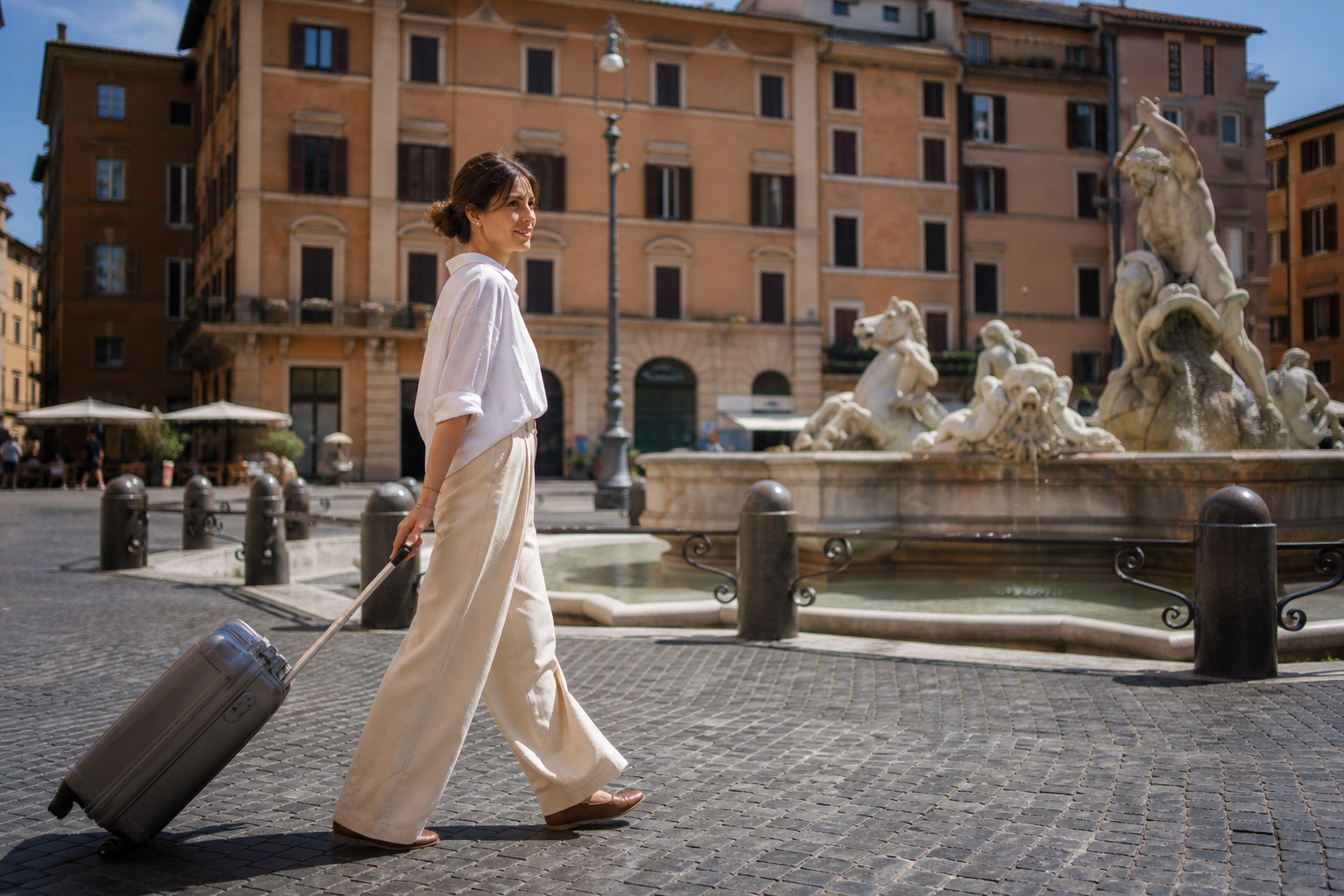
Rome deserves the most time. Its sights are spread widely, and several need advance booking. With three days, give one to ancient Rome (the Colosseum, Roman Forum and Palatine Hill), one to the Vatican (the Vatican Museums, the Sistine Chapel and St. Peter's Basilica), and one to the historic center, where the Pantheon, Piazza Navona, the Trevi Fountain (the square is free, though stepping down to the basin now needs a small ticket) and the Spanish Steps can be linked on foot. A fourth night lets you slow down, visit the Borghese Gallery, or cross into Trastevere for a long dinner.
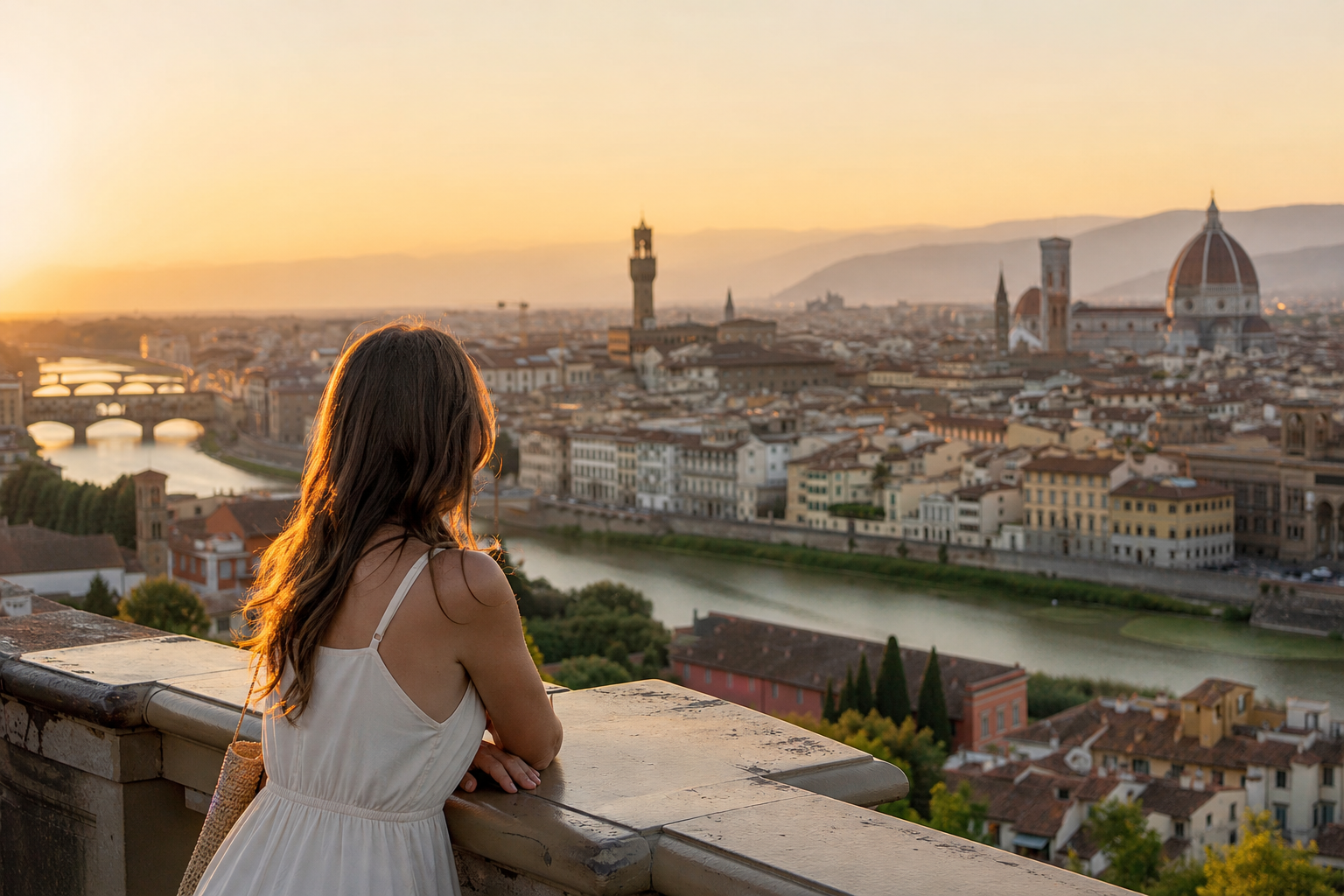
Florence is compact and walkable. Two nights gives you one full day for the Uffizi Gallery, the Duomo complex and the Ponte Vecchio, plus an evening or morning for the Accademia Gallery, home of Michelangelo's David. A third night lets you add the Oltrarno district, Piazzale Michelangelo at sunset, or a day trip.
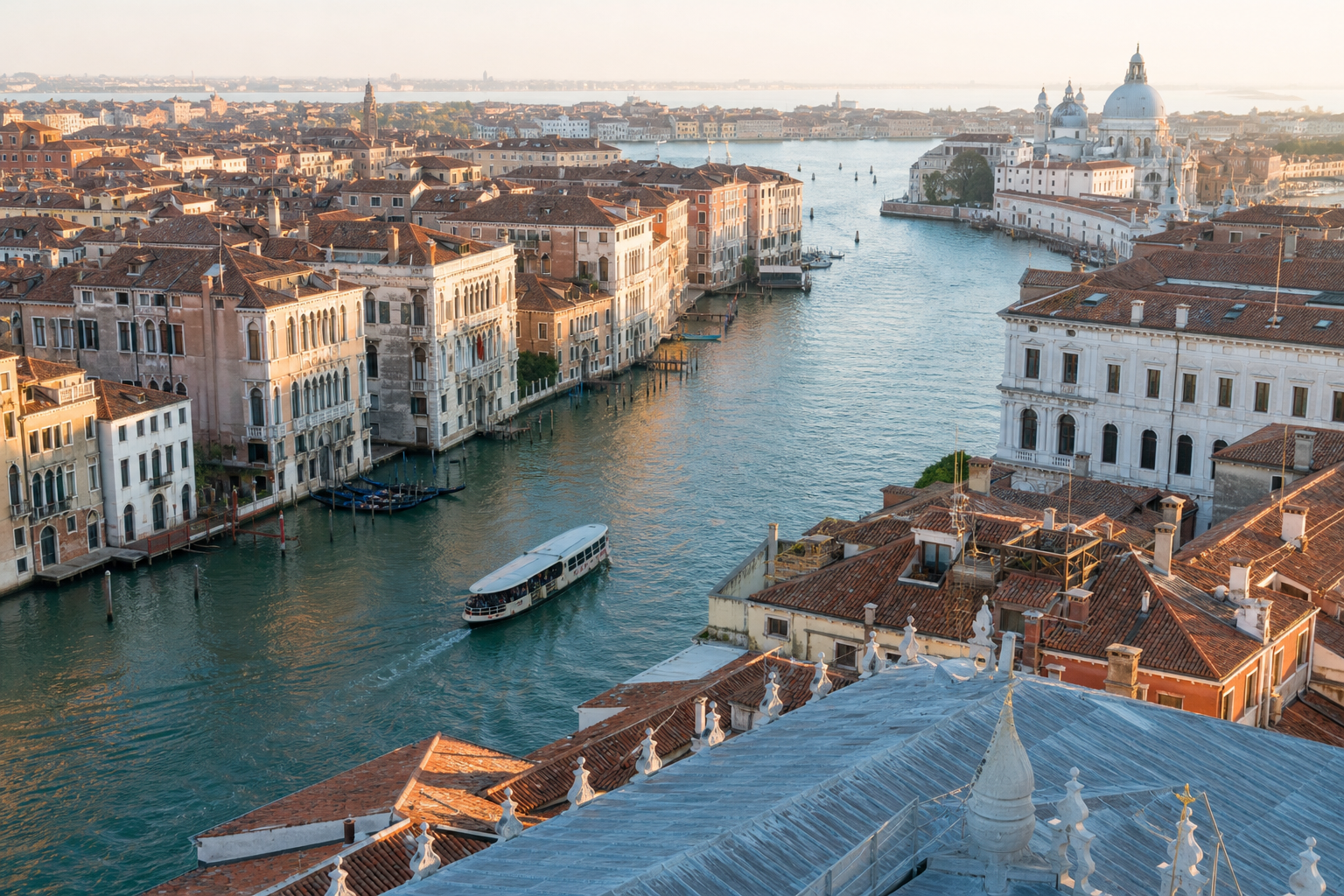
Venice is where extra time pays off most, because the lagoon is a large part of the experience. Two nights covers St. Mark's Basilica, the Doge's Palace, a vaporetto ride down the Grand Canal and an unhurried wander through Dorsoduro and Cannaregio. If you can spare a third night, you can visit the lagoon islands of Murano, Burano and Torcello without rushing.
A realistic seven-day shape looks like this: arrive in Rome on day one, spend days two and three in Rome, take the train to Florence on day four, spend day five in Florence, move to Venice on day six, and use day seven for Venice and your departure. Treat the travel days as half-days. Checking out, boarding and checking in will eat the middle of the day.
Rome to Venice or Venice to Rome: Which Direction Is Better?

Both directions work, and the right choice usually comes down to flights. For most travelers we favor Rome first and Venice last, for three reasons. Rome is the easiest place to recover from jet lag, with plenty of transport and restaurants. The trip then builds from monumental Rome to Renaissance Florence to the dreamlike quiet of Venice, which makes a gentle finale. And Venice is a place where a slow, lazy last day feels natural.
The smartest booking approach is an open-jaw ticket: fly into Rome Fiumicino (FCO) and out of Venice Marco Polo (VCE), or the reverse. Many transatlantic carriers allow multi-city bookings, and an open-jaw spares you a travel day backtracking to your arrival airport. Compare it against a round-trip fare. The open-jaw is not always cheaper, but it nearly always saves time.
If your best flight deal lands in Venice, reversing the route is perfectly fine. The one practical difference is that you would start in the city that is hardest to navigate with luggage, since Venice has no cars and many bridges with steps. Pack light either way. A carry-on-size bag makes the whole trip easier, particularly in Venice.
Train Legs: Getting Between the Cities
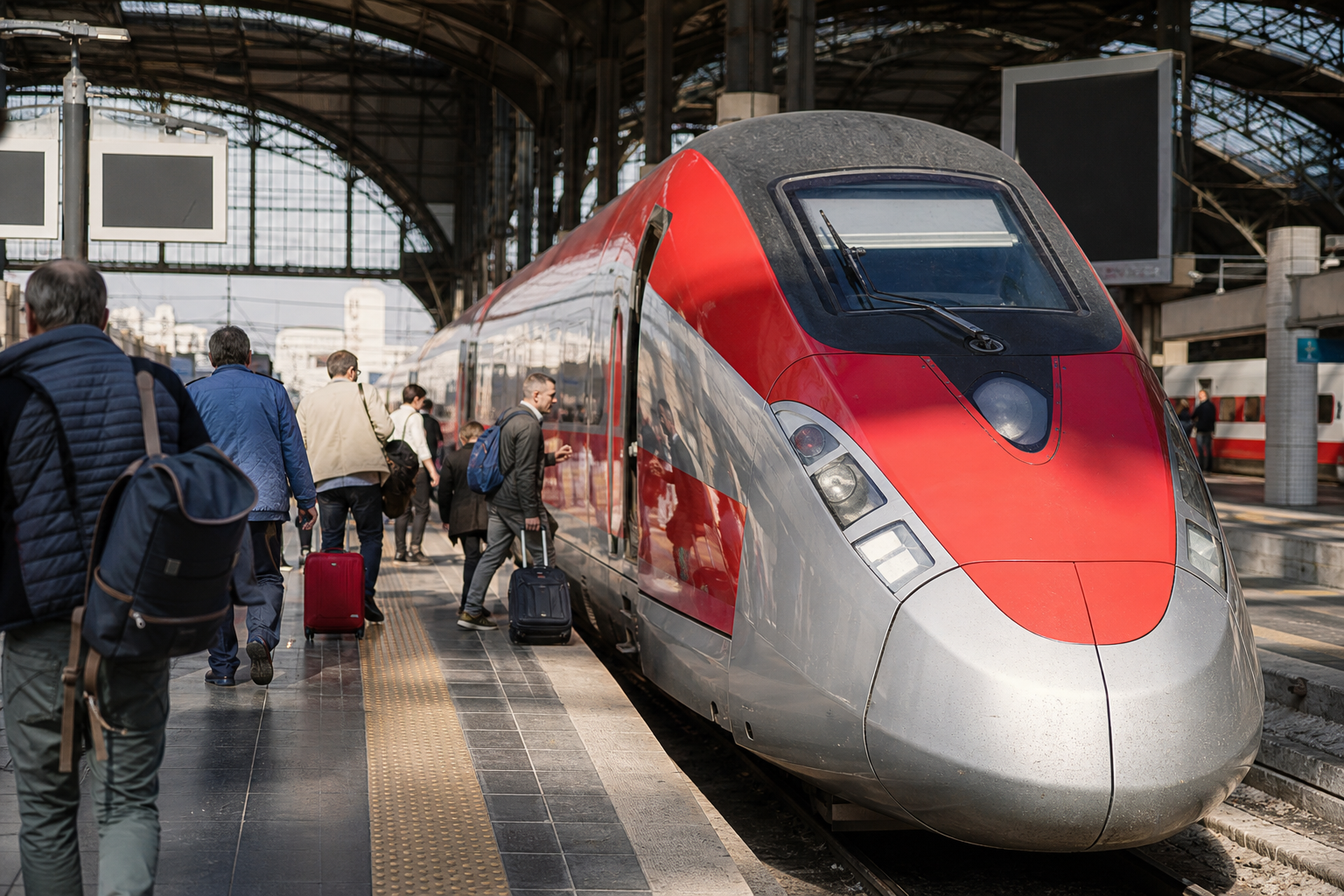
The train is the backbone of this itinerary. Rome to Florence and Florence to Venice are both served by high-speed services run by Trenitalia (Frecciarossa and Frecciargento) and the private operator Italo. Rome to Florence takes roughly an hour and a half on the fastest services, and Florence to Venice takes roughly two hours. Always confirm exact departure times on the operator's own website or app, since schedules change by season.
Book ahead. High-speed tickets are sold for specific trains with assigned seats, and the lowest fares are released in limited numbers and sell out as the date approaches. We suggest booking once your dates are firm, often a month or two ahead in peak months, and keeping a flexible fare if your plans might shift. Don't rely on regional trains for these legs. They are cheaper but slower, and they add considerable time.
Know your stations. Rome's main high-speed hub is Roma Termini. Florence's is Firenze Santa Maria Novella, a short walk from the historic center. Venice's is Venezia Santa Lucia, which sits on the Grand Canal, so you step out of the station directly to the vaporetto stops. Some Venice trains terminate at Venezia Mestre on the mainland, so check that your ticket says Santa Lucia, not Mestre. If you want to take the train further afield, our guide to spectacular European train trips shows what else rail travel can offer on the continent.
When you arrive at Fiumicino, the Leonardo Express runs directly to Termini. Taxis in Rome run on a meter, except for trips to and from the airports, which carry a fixed fare for the city center inside the Aurelian Walls. Confirm which one applies before you get in. Pre-booked private transfers are an option if you arrive late or travel with a lot of luggage.
Where to Stay in Rome
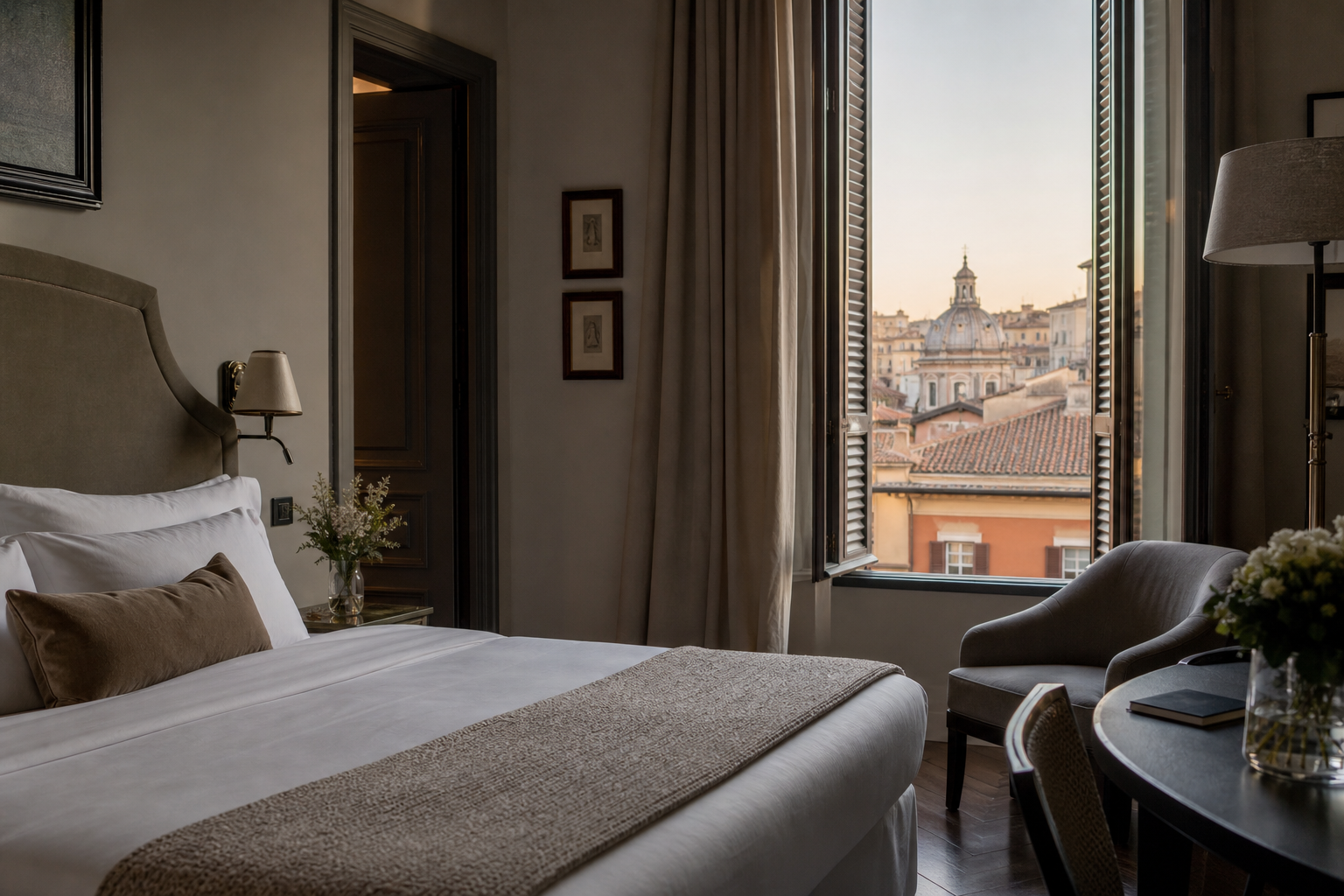
For a first visit, we recommend basing yourself in the historic center, within walking distance of the Pantheon and Piazza Navona. The area around Campo de' Fiori and Piazza Navona puts most major sights within a 20 to 30 minute walk, and evenings are lively. Monti is another favorite: a village-like neighborhood close to the Colosseum with independent shops and good restaurants. If you prefer quiet streets, Prati, near the Vatican, is residential and well connected by Metro Line A, and it makes the early Vatican start easy.
The area around Termini is convenient for arriving and leaving by train, and it has the widest range of hotels, though some streets feel busy at night. If your itinerary leaves on an early train, one night near Termini can be a sensible choice. You can Browse Rome hotels on Hotels.com to filter by neighborhood. Check the location on the map rather than trusting a listing's claim of being central.
A few practical notes. Rome charges a city accommodation tax per person, per night, collected by the hotel and usually paid at check-out rather than at booking. The amount depends on the hotel's star rating and is capped for a set number of consecutive nights, so check the current rules on the city's official tourism site. Many central buildings are old and have lifts that fit only two people, so ask about stairs if mobility matters. When you are ready to compare rates, you can also Compare hotel deals on Hotels.com for your exact dates.
Where to Stay in Florence and Venice
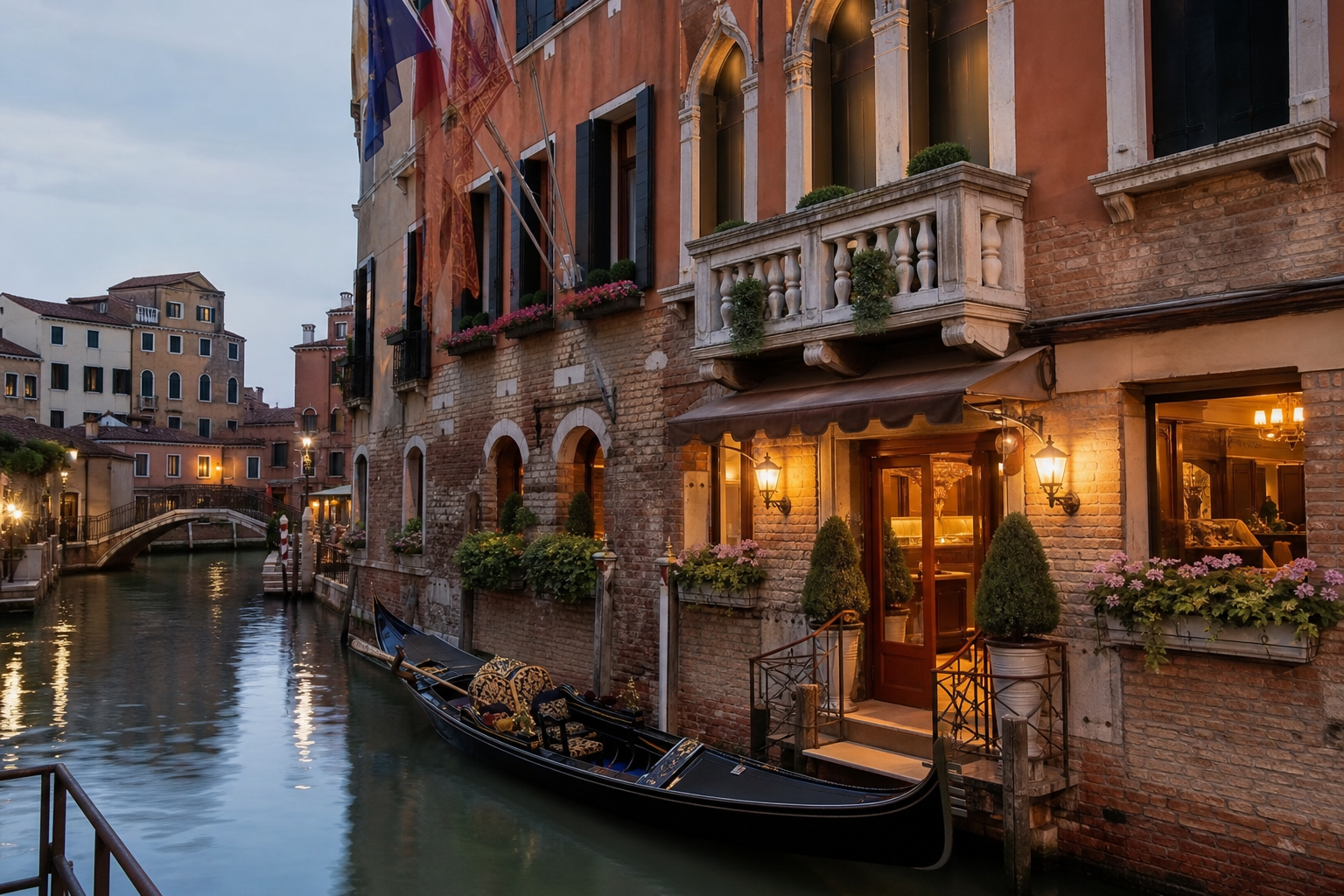
In Florence, stay inside or right beside the historic center. The area between the Duomo and Piazza della Signoria is the most convenient, and the streets around Santa Maria Novella station suit a short stay with early trains. Santa Croce has a local feel and good food. The Oltrarno across the river is quieter, with artisan workshops and a more residential rhythm. Florence's center has a limited traffic zone, so taxis and private cars may not reach every door. Confirm with your hotel how to arrive with luggage.
In Venice, the district you choose shapes your trip. San Marco puts you at the main sights but is the busiest and priciest area. Dorsoduro is our pick for first-timers who want atmosphere, with the Accademia bridge, Zattere waterfront and quieter lanes. Cannaregio is calmer and more local, and it sits close to the station. Staying on the mainland at Mestre can be cheaper, but the commute and the loss of the quiet evening and early morning hours in the lagoon are a real cost on a short trip.
Both cities collect a visitor tax per person, per night, payable at the property, and the rate varies by accommodation type and season. Venice also charges a separate access fee on set days for day-trippers who do not sleep in the city, with a published calendar of charged dates. Check the official calendar before you go. Overnight guests are generally exempt, but rules change, so check the city's official Venice site before you travel. To compare options for both cities in one place, Compare hotel deals on Hotels.com and check the cancellation terms before you commit.
Timed Tickets You Should Book Before You Go
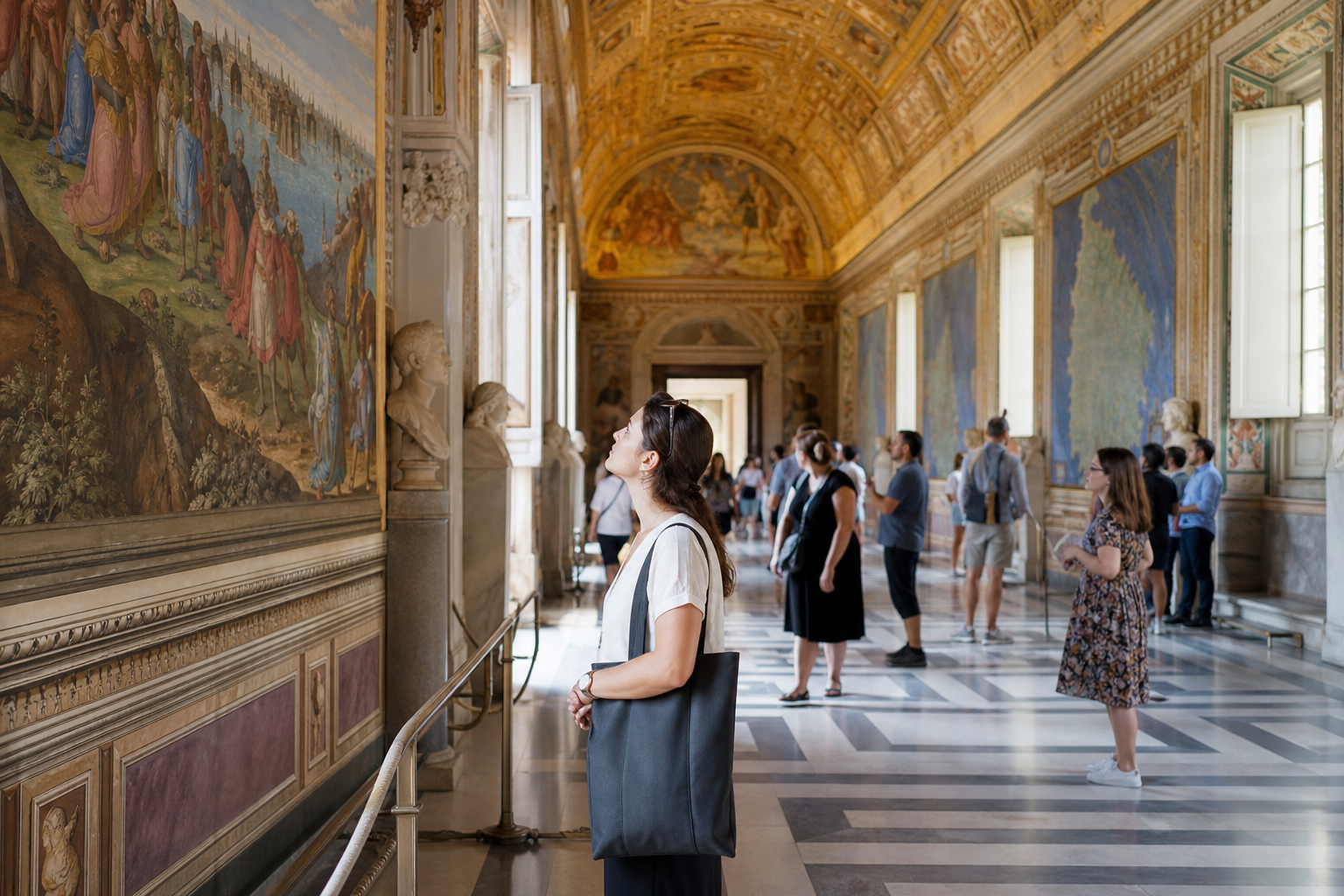
Italy's biggest attractions run on timed entry, and the most popular slots sell out. Book these directly on the official sites as soon as your dates are confirmed, and be wary of resellers with inflated prices.
In Rome, book the Vatican Museums and Sistine Chapel through the official Vatican Museums ticket site, and choose the first entry of the day if you can. The Colosseum, Roman Forum and Palatine Hill are sold through the official Colosseum archaeological park ticketing, and tickets are named and timed. The Pantheon has charged an entry fee since July 2023 for most visitors, so confirm current access on the day. The Borghese Gallery also requires a reserved time slot.
In Florence, reserve the Uffizi Gallery and the Accademia Gallery in advance. Queueing without a reservation in high season can eat up hours. The Duomo complex, including Brunelleschi's Dome, uses a pass system with a booked climbing time, so lock that in early if you want the view.
In Venice, St. Mark's Basilica offers a reserved entry option that lets you skip the line, and the Doge's Palace is also best booked ahead. Spread your timed slots across different parts of the day, and leave a gap for lunch. Over-scheduling is the most common mistake we see on this route.
Day Trips Worth Adding
If you have nine or ten days, one or two day trips add variety without extra hotel changes. From Rome, Orvieto is an easy rail journey to a hilltop town with a striking Gothic cathedral. Tivoli, east of Rome, offers the Renaissance gardens of Villa d'Este and the ruins of Hadrian's Villa. Ostia Antica, Rome's ancient port, is reachable by suburban rail and is far quieter than the Forum. Pompeii is possible as a long day from Rome, but it is a big outing, and we would give it a night if you are drawn to Naples and the Amalfi coast.
From Florence, Siena is a popular choice for its shell-shaped Piazza del Campo and its Gothic cathedral. Pisa is easy by train and makes a quick visit to see the Leaning Tower in the Piazza dei Miracoli. A Chianti wine outing by organized tour or private driver suits travelers who prefer not to drive.
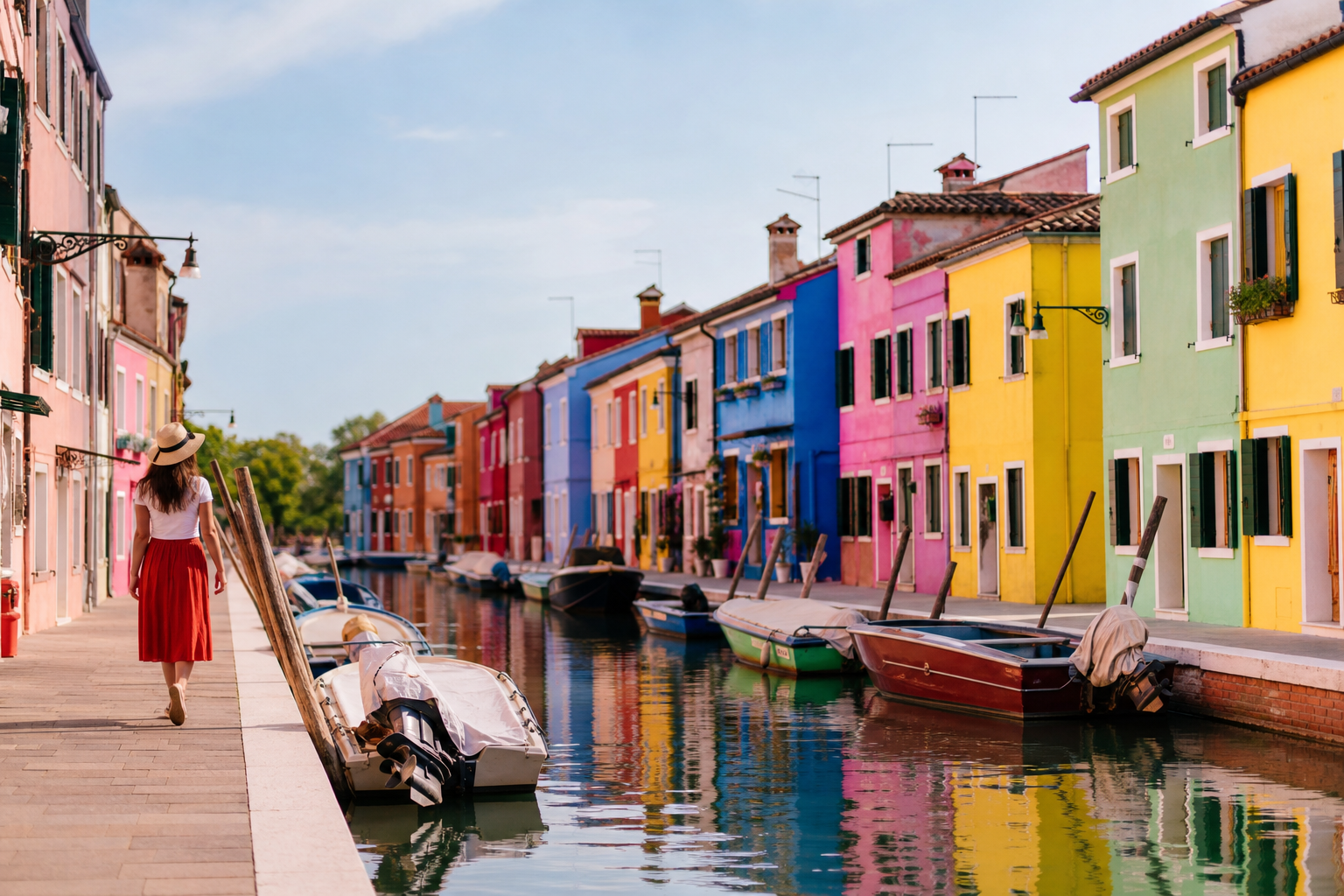
From Venice, the boat to Murano and Burano is the classic half-day, with glassmaking on Murano and brightly painted houses on Burano. Torcello, a short boat ride beyond, is peaceful and holds one of the lagoon's oldest churches. Padua, with Giotto's frescoes in the Scrovegni Chapel, is a short train ride and requires a timed reservation.
When to Go and How to Save Money
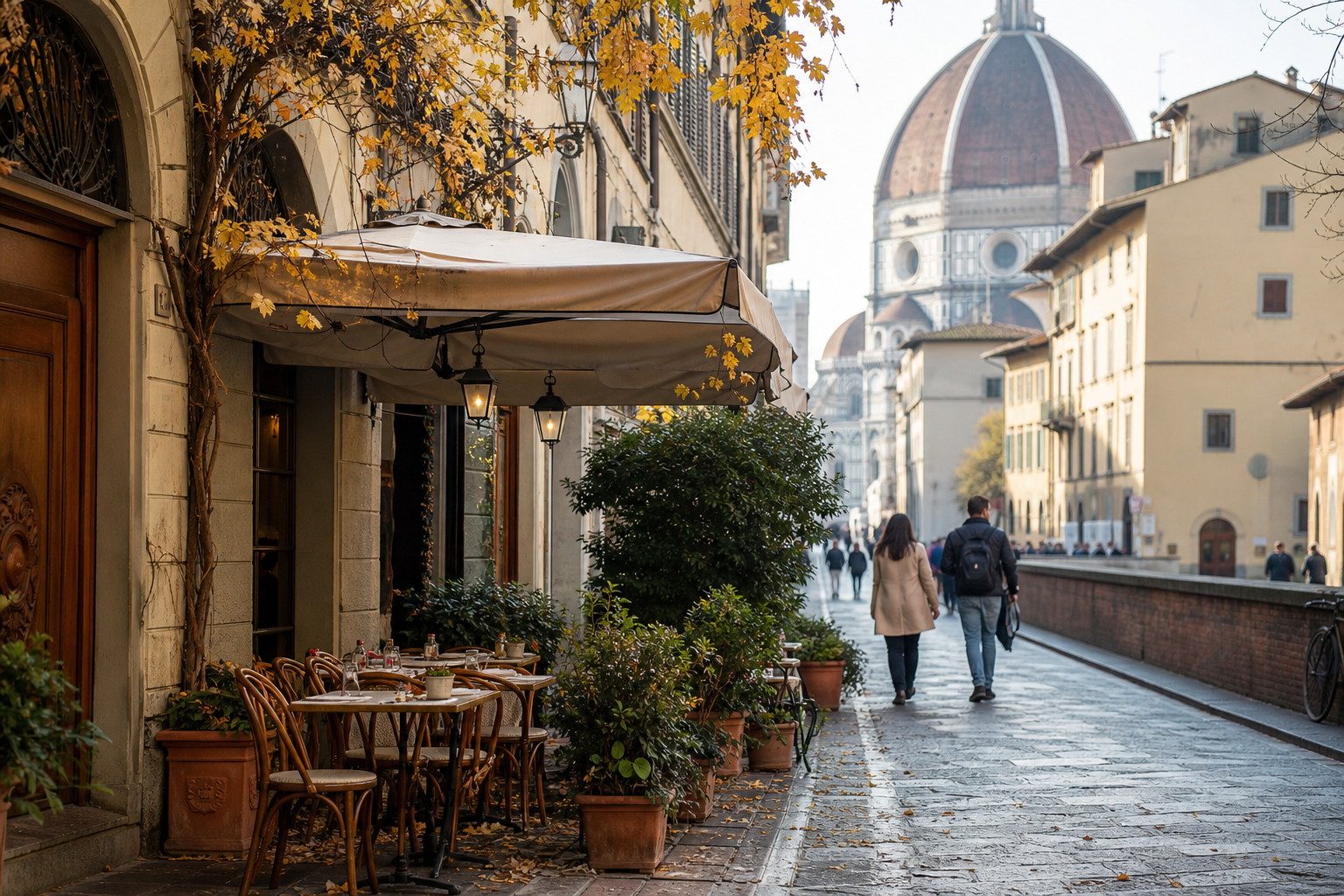
The shoulder seasons of April to early June and September to October offer the best balance of weather and crowds. Temperatures are comfortable for walking, daylight is long, and the lines are shorter than in July and August. Summer brings heat that can be punishing in Rome and Florence, plus peak prices and crowded museums. Winter is quieter and cheaper, but some days are short, and Venice can see acqua alta, the seasonal high tides that flood low-lying areas, typically in autumn and winter. Easter week and major holidays are busy everywhere, so book well ahead.
To keep costs sensible, book trains and timed tickets early, choose hotels near stations for the transfer nights, and eat where locals do, away from the main squares. Carry a refillable bottle, since Rome has free drinking fountains known as nasoni. Budget for the city tax in each location, and pay it in cash if your hotel requests it. Finally, validate regional train tickets if they are not date-stamped, and keep an eye on your belongings around Termini, the Colosseum and crowded vaporetto stops, where pickpocketing is a known issue.
Frequently Asked Questions
Yes, seven days covers the highlights if you accept a fast pace. We suggest three nights in Rome, two in Florence and two in Venice. Ten days is more comfortable and leaves room for a day trip.
Most first-timers do Rome, then Florence, then Venice. It matches the main train line, and ending in Venice makes a calm finish. The reverse order works equally well if your flights suit it.
On the fastest high-speed services, Rome to Florence takes roughly an hour and a half. Check exact times on Trenitalia or Italo, since schedules vary by season.
The high-speed train from Florence to Venice takes roughly two hours. Make sure your ticket ends at Venezia Santa Lucia, which is on the island, rather than Venezia Mestre on the mainland.
An open-jaw ticket into Rome Fiumicino and out of Venice Marco Polo saves a backtracking day. Compare it against a round-trip fare, because the price difference varies.
Yes. The Vatican Museums, the Uffizi Gallery and the Accademia Gallery all use timed entry, and popular slots sell out. Book on the official sites as soon as your dates are firm.
No. High-speed trains connect all three cities, and the historic centers restrict traffic. A car is only useful if you plan to explore the Tuscan countryside.
April to early June and September to October are the best shoulder seasons, with pleasant weather and smaller crowds than July and August.
Yes. Rome, Florence and Venice all charge a per-person, per-night city tax, collected by the accommodation. Rates depend on the city, hotel type and season, so check the official city tourism site.
Dorsoduro is a good first-timer choice for its quieter lanes and central location. San Marco is closest to the major sights but is busier, and Cannaregio is calmer and close to the station.